Dodgers Prospects: Does Zach Lee Still Have Value?

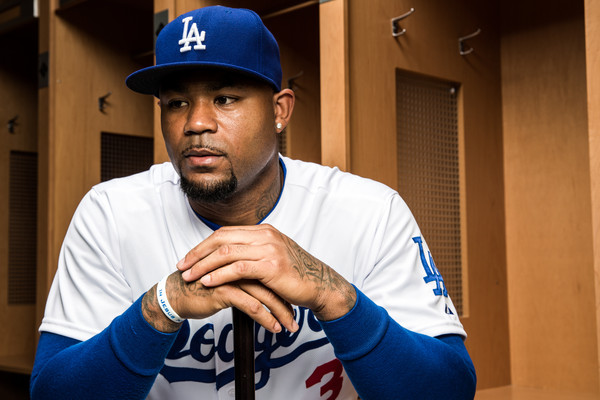
Los Angeles Dodgers workout

Once considered the crown jewel of the Los Angeles Dodgers farm system, former first-round draft pick Zach Lee continues to tumble in the team’s prospect rankings despite relatively consistent numbers.

Chosen by the Dodgers with the 28th overall pick in the 2010 MLB Draft, Lee had previously committed to play quarterback for the LSU Tigers, but ex-Assistant GM Logan White swooped in with a signing bonus offer of $5.25 million, which eventually persuaded Lee to stick with baseball.

After a solid age-19 season with the Great Lakes Loons in 2011, Lee was unanimously ranked #1 among all Dodgers’ prospects in 2012, and many scouts viewed him to have the potential to be at least a #2 starter in the bigs.

He began 2012 with High-A Rancho Cucamonga, and continuing to climb the organizational ladder, progressed quickly to Double-A Chattanooga. In 2013, Lee secured a spot in the Southern League All-Star game and compiled a 10-10 record with a 3.22 ERA in 28 appearances. He struck out 131 batters over 142 innings that season, sporting a 8.3 K/9.

Despite the solid progression, Lee began to fall in the Dodgers’ prospect rankings, mainly thanks to the emergence of newcomers Yasiel Puig, Joc Pederson and Corey Seager.

In the high desert of Albuquerque in 2014, his numbers declined as expected, as he put together a 7-13 record over 150 innings of work, with a 5.39 ERA, a 1.537 WHIP and a meager 5.8 K/9.

Not including his shaky debut in the bigs, Lee found reasonable success with Oklahoma City last season. But with the ascension of players like Julio Urias, José De León and Yadier Alvarez, he continues to plummet in the prospect rankings.

Preliminary rankings for 2016 have him placed in the #13 – #15 range within the Dodgers’ organization.

After beginning his career with a ceiling of a possible #2 starter, many scouts now view him as a potential #4 or #5 at best.

All that being said, does Zach Lee have any value to a team like the Los Angeles Dodgers and their immediate needs?

His command is still sharp, which was made evident by his 1.5 BB/9 last season. His sinker is consistently solid, resulting in a 50% ground ball rate. His slider is still developing, which will eventually compliment his four-seamer, changeup and above-mentioned sinker. He still shows plenty of velocity with the heater, so there is some upside.

It’s tough to speculate how he fits in with the Dodgers. Heading into 2016, the rotation at Triple-A OKC is extremely crowded, and it may be possible that he’s packaged in some type of potential trade scenario. Regardless, he is one of three pitchers in the minors that is considered MLB-ready, and may get a call-up at some point depending on how much starting pitching depth the Dodgers stash via trade or free agency.

As for the long term, with players like Brandon McCarthy and Alex Wood around for several more years, it’s hard to see Lee being a fit in the back end of a rotation that soon may be featuring Clayton Kershaw, Hyun-jin Ryu, De León and Urias up front.

With all the the new talent emerging, perhaps the Dodgers’ best bet is to find a deal for Lee with another squad who would appreciate the ceiling of a #4 or #5-type starter, especially before his value slips any further.

After all, at one point he was completely untouchable.

(Photo Credit: Jon SooHoo/Los Angeles Dodgers)

Los Angeles Dodgers 25-Man Roster: 2015 Holiday Edition

6-los-angeles-dodgers-joe-hamilton

As we approach Christmas weekend, everyone here at TBPC chose to put together a fun, quick post about the Los Angeles Dodgers that really wouldn’t take a ton of work or research.

We decided on taking a look at the 25-man roster as if the season began today — basically just to illustrate how much work actually remains before pitchers and catchers report on February 19.

A few things to note before we begin: we did include Yasmani Grandal and Justin Turner, assuming they make clean recoveries and are 100% healthy by spring training. We did not, however, include Hyun-jin Ryu. Currently, all signs point to him being on schedule, but there are just too many factors at this point to pencil him into the starting rotation.

So with no further ado, here’s how we broke down our version of the 25-man at this juncture of the offseason (and it wasn’t really fun or quick, by the way):

Outfielders (5) – Andre Ethier, Joc Pederson, Yasiel Puig, Carl Crawford and Scott Van Slyke

Infielders (6) – Justin Turner, Corey Seager, Chase Utley, Adrian Gonzalez, Enrique Hernandez and Alex Guerrero

Catchers (2) – Yasmani Grandal and A.J. Ellis

Starting Pitchers (5) – Clayton Kershaw, Brett Anderson, Alex Wood, Mike Bolsinger and Carlos Frias

Bullpen (7) – Kenley Jansen, Chris Hatcher, Pedro Baez,  J.P. Howell, Luis Avilan, Yimi Garcia and Adam Liberatore

Of course, the most glaring concern is the starting rotation. There’s no need to panic just yet, because additions will be made and there’s still plenty of time. January 8 is an important date to remember, as Kenta Maeda‘s camp will have arrived at a contract decision by day’s end. And it’s also safe to speculate that at least one other starter will be added via trade or free agency, giving Frias the ability to slide back into the swingman role.

A strong and healthy Ryu would also fill a slot, but it’s just not safe to hope and wait for that length of time.

It’s very much worth noting that the two most talented pitchers in the entire organization not named Kershaw, José De León and Julio Urias, aren’t even a part of the 40-man roster just yet. Look for that to change as Opening Day approaches — unless some type of impact trade occurs and surprises everyone.

Another area of concern is the bullpen, which right now looks the same as last year, sans Juan Nicasio and Jim Johnson. This seems to be a priority for Andrew Friedman as well, as made evident by the attempt to bring aboard Aroldis Chapman. There are a few other options in-house, as players such as Frankie Montas, Jharel Cotton, Chris Anderson, Josh Ravin and Ian Thomas are waiting in the wings.

With the exception of the Alex Guerrero situation, the infield may hold up just fine barring any type of injury epidemic. Ronald Torreyes waits at Triple-A to provide any required cover at second, third or short. Micah Johnson, Charlie Culberson and Austin Barnes could provide additional depth, if needed.

Trayce Thompson was acquired to provide complimentary depth at all three outfield spots, but it’s inconceivable to think that the Dodgers will carry six outfielders. It’s easy to speculate that somebody could be moved in some type of trade for a much needed starting pitcher or bullpen piece.

One additional area of concern is the lack of the traditional leadoff batter. Pederson’s strikeout rate is way too high for him to maintain a high OBP. Other options here are limited, but may include Hernandez or Puig, being that the sabermetric philosophy of Friedman doesn’t put a high value on stolen bases.

All that being said, there’s still a multitude of work remaining for the front office. Hopefully Farhan Zaidi and Friedman come fresh out of the gates after the New Year, and finish molding the roster with high hopes, expectations and the talent to contend in 2016.

(Photo Credit: Joe Hamilton)

Weighing the Dodgers’ Options with Carl Crawford

Carl+Crawford+Los+Angeles+Dodgers+Photo+Day+3q8Rla7NgnWl

With spring training less than two months away, the Los Angeles Dodgers have been relatively quiet in the player personnel department; but as February quickly approaches, expect the Dodgers front office to start shuffling a few players — especially in the outfield.

One player who continues to draw consistent criticism from the fan base is left fielder Carl Crawford.

Crawford, 34, is under contract with the Dodgers through the 2017 season. He’ll earn $21,607,000 in 2016 and $21,857,000 in his walk year.

His banner year as a Dodger came in 2014 when he slashed .300/.339/.429 in 105 appearances.

He has often been hampered by injuries, which was the case in 2015, when he missed almost half the season with a serious oblique strain.

There’s no question that a healthy Crawford can contribute to the Dodgers in some extent, but whether or not he can produce to the tune of $21 million remains to be seen. With up to six outfielders competing for roster spots in 2016, every spot on the 25-man is extremely valuable.

All things being considered, Andrew Friedman and Farhan Zaidi are faced with making a decision regarding Crawford, with the outcome hinging on three possible scenarios.

The first, which is the most unlikely, is to designate him for assignment. Although Friedman has shown no fear of DFA’ing players with hefty contracts in the past (see Brian Wilson and Brandon League), $43 million is just too large a sum to simply throw away, especially if Crawford is healthy enough to produce.

The next scenario is to try and trade him to another team. Looking at this on the surface, it seems like an impossibility, but don’t discount the creativity of Friedman.

A one-for-one deal with another team is highly improbable unless the Dodgers would settle for a lower-tier prospect and send money for all of Crawford’s 2016 contract, plus a check for a chunk of his 2017 salary. However, that’s not to say that Friedman couldn’t score a 3-4 team deal involving pieces that are only conceivable to the imagination. It’s safe to believe that Friedman and Zaidi have been on the phones now for sometime trying to make this happen.

The final option is to play Crawford part-time in left field and to utilize him as a late inning bench piece. Without a myriad of injuries, it’s reasonable to assume that Crawford won’t play every day, as there are just too many options besides him that will net better results. That being said, if the Dodgers were to trade away one or more core components of their current outfield corps, a starting spot could be conceivable.

There’s still enough time for the landscape to change in terms of players coming and going via trade, thus the decision for Friedman and Zaidi may get easier. However, a bench piece making $21 million annually will make Friedman cringe, and based on his beliefs and philosophies, he’ll certainly try his best to get a better return for his investment down the road.

(Photo Credit: zimbio.com)

Projecting the Starting Rotation at Oklahoma City

urias1280_ia7bt3br_s1tza91n

Although the starting pitching rotation for the 2016 Los Angeles Dodgers is still very much in doubt, the same cannot be said for their Triple-A affiliate, the Oklahoma City Dodgers.

Truth be told, after a brief analysis of available starting pitchers on the farm, nine different hurlers have a legitimate shot at vying for a rotation spot in OKC. Let’s take a look at all nine pitchers, listing their ages come Opening Day, number of option years remaining, and where they may begin their respective 2016 campaigns.

  • Mike Bolsinger – 28 years, one option remaining
  • Carlos Frias – 26 years, one option remaining
  • Joe Wieland – 26 years, one option remaining
  • Zach Lee – 24 years, two options remaining
  • Ross Stripling – 26 years, all three options remaining
  • Jharel Cotton – 24 years, all three options remaining
  • Frankie Montas – 23 years, all three options remaining
  • José De León – 23 years, all three options remaining
  • Julio Urias – 19 years, all three options remaining

Needless to say, that’s a very crowded yet talented list. Andrew Friedman and Farhan Zaidi may decide to simplify things by moving a few to the bullpen, or more likely, use several as trade pieces in a package for a much needed impact starter at the big league level.

Carlos Frias may command a spot on the 25-man roster, perhaps filling the role that Juan Nicasio held last season as long man or spot starter. Frias made 17 appearances including 13 starts for the Dodgers last season, hurling 77.2 innings to a tune of a 4.06 ERA.

Both Mike Bolsinger and Joe Wieland are also considered MLB-ready, and barring any trade or the need to begin the season in the Dodgers rotation, will certainly fill starting roles for OKC.

After a hot start, Bolsinger ended up contributing 109 innings over 21 starts in the bigs, compiling a 6-6 record with a 3.63 ERA and a 8.1 K/9.

Wieland made two unsuccessful starts for the Dodgers in 2015, but put up relatively consistent numbers for OKC. He threw 113 innings over 21 starts and posted a 4.59 ERA.

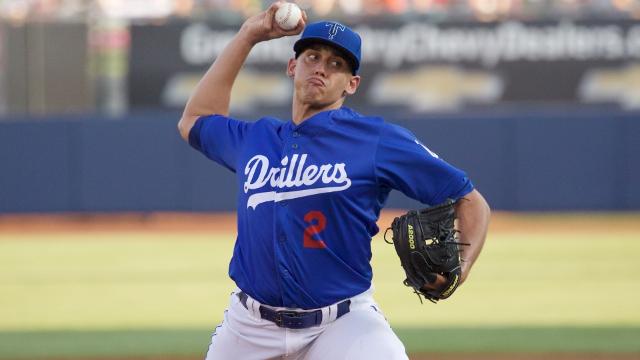
Former first-round draft pick Zach Lee had a nightmare of a debut for the Dodgers, but put up solid numbers in Triple-A. Lee hurled 113 innings over 19 starts sporting a 2.70 ERA. He also likely fills a starting slot for Oklahoma City.

Having had Tommy John surgery and sitting out all of 2014, Ross Stripling returned and pitched 67 innings over 13 starts for the Tulsa Drillers last season. He was added to the 40-man in November to protect him from Rule 5 status. Stripling isn’t overpowering, but features a nasty arsenal of breaking pitches much like Bolsinger. Stripling has never thrown at the Triple-A level, and may begin the year at Tulsa just to make room for others at OKC.

Although two completely different pitchers, Jharel Cotton and Frankie Montas find themselves in similar situations. Cotton had been a starter, and was given an opportunity to relieve late last season, while Montas has proven himself as a reliever but projects as a hard-throwing starter.

Cotton, who probably has the best changeup in the Dodgers system, projects better as a starter due to the lack of velocity on his fastball (90-91 MPH). His breaking pitches are his best weapons, leading him to a 10.7 K/9 in almost 100 innings of work last year.

Whether an honest evaluation, or an attempt to make him look attractive to other teams as a trade piece, Andrew Friedman continues to hype the talent of Montas. Friedman believes that his fastball-slider combo is among the best in the minors and often touts his triple-digit fastball. If able to maintain his command as a starter, there’s no doubt Montas will climb to the top of the Triple-A rotation quickly.

Perhaps the two most talented starters among the entire group are José De León and Julio Urias. Although both have ascended through the Dodgers’ system rapidly, neither is on the 40-man roster.

In terms of control, fastball velocity, mental maturity and overall talent, De León is fully developed physically and ready to go. If there’s still a crowded house come Opening Day, he may begin the season at Tulsa, but should make the jump to Triple-A quickly and be ready for a fall call-up when rosters expand in September.

Urias, the prized-possession of the farm, most likely needs one additional season on an innings count due to the fact that he’s still developing physically. He may be promoted to the 40-man at some point depending on the movement of other players, but like De León, should get a taste come September.

Based on no players being moved, and no service needed at the MLB level (assuming the Dodgers sign somebody like Kenta Maeda and one other free agent pitcher), we see things shaping up like this:

  • OKC starting rotation: Bolsinger, Urias, Lee, Montas and Wieland; with Cotton as long man and spot starter
  • De León and Stripling beginning the year at Double-A Tulsa but rising quickly
  • Frias beginning the season as long man in the bigs

Of course, all this could change with an injury or any type of trade. Although the logjam could create some minor headaches for the managers and directors on the farm, it’s certainly a good problem to have — especially when the big league squad needs all the help it can get.

(Photo Credit: MLB.com)

Hyun-Jin Ryu on Pace to Return by Spring Training

Hyun-Jin-Ryu2

Fans of the Los Angeles Dodgers finally received a bit of good news on Friday when starting pitcher Hyun-jin Ryu publicly revealed the progress regarding his recovery from last spring’s shoulder surgery.

Alongside teammate Justin Turner, several Dodgers legends, and members of the Los Angeles Dodgers Foundation, Ryu was at Dodger Stadium hosting 300 pre-selected schoolchildren at the annual Children’s Holiday Party.

Dodgers reporter Ken Gurnick of MLB.com first reported the news Friday evening.

“Other than throwing off a mound and going all out, I pretty much can do everything I want to do. I’m on a great program and everything is going great. No discomfort, absolutely nothing,” Ryu explained.

“I have no reason to believe I won’t be ready for Spring Training.”

Although the Dodgers’ medical staff and trainers are monitoring Ryu’s progress closely, the news comes as a bit of relief to many impatient fans who see a very sizable void in the starting rotation.

“My personal goal is to be in the rotation Opening Day until the season ends,” Ryu said.

Despite knowing that his initial physical before the 2013 season revealed a torn labrum in his left shoulder, Ryu pitched with the injury for two seasons and went 28-15 with a combined 3.17 ERA.

His best year was his rookie campaign in 2013, when he hurled 192 innings in 30 games, posted a 14-7 record (including one shutout) and a 3.00 ERA — numbers certainly worthy of a #2 rotation slot.

In light of Ryu’s progress, Dodgers’ President of Baseball Operations Andrew Friedman considers Ryu a “wild card” in terms of being ready for Opening Day.

Even with Ryu healthy, the Dodgers still need to add rotation depth, unless a solid and dependable option emerges from the farm  — most specifically Jose De Leon or Julio Urias.

The Dodgers have also been linked to trade rumors involving the Cleveland Indians and Tampa Bay Rays, as well as talks with free agent starters Mike Leake and Scott Kazmir.

Perhaps the best option of any is Japanese righty Kenta Maeda, who was posted by the Hiroshima Carp on December 10, and has a 30-day window to complete a contract agreement.

Regardless of what the Dodgers decide to strengthen and deepen the starting rotation, a healthy Ryu to begin the season would be very much welcomed by the fans, the players, and management alike.

(Photo Credit: isportsweb.com)

Dodgers Prospects: Scouting Yadier Álvarez

the-los-angeles-dodgers-wasted-no-time-on-the-first-day-of-the-international-signing-period

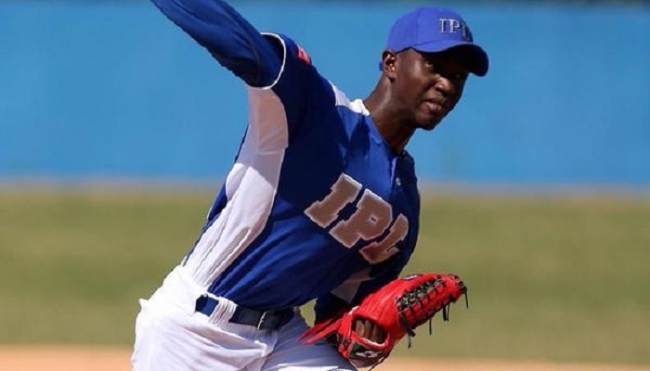
Digging deeper into the seemingly limitless list of pitching prospects in the Los Angeles Dodgers organization, another name sure to turn heads in the very near future is Cuban righty Yadier Álvarez.

After defecting from Cuba at the age of 18 and showcasing his skills in the Dominican Prospect League, the Dodgers signed Álvarez to a $16 million bonus on the first day of the 2015-2016 international signing period last July.

He’s currently ranked as the 10th best prospect in the Dodgers organization by Ben Badler of Baseball America.

Badler’s initial report of the Álvarez signing included this brief tidbit of scouting data:

“Alvarez, 19, has been clocked anywhere from 92-98 mph with his fastball, with a skinny frame (6-foot-3, 175 pounds) and a quick arm. His secondary stuff is inconsistent, but he has flashed an above-average slider that’s ahead of his changeup, a pitch he’s still learning to maintain his arm speed when he throws one. There’s some wildness in the very limited track record that exists with Alvarez, who never pitched in Serie Nacional and did not make Cuba’s junior national team before he left the island.”

Dodgers Senior Vice President of Baseball Operations Josh Byrnes and other Dodgers scouts were intrigued by the velocity of Álvarez’s fastball and potential for plus breaking stuff dating back to December of 2014.

“He’s one of the more talented teenage right-handed pitchers we’ve seen. A lot of us have been doing this a long time,” Byrnes said. “He has a prototypical body, with high-end velocity. We’ve seen him consistently 92-97 mph, occasionally touching 99-100. There is very little effort, a pretty good feel for secondary pitches, and he’s a pretty good strike-thrower. He’s got a long way to go, but his foundation, his ingredients for his age are pretty rare, so we’re excited to have him.”

It’s hard to say this early if Álvarez has the stamina or durability to be a starter. He finished out 2015 by throwing 2-4 innings per clip during workouts in the Dominican Republic, and it’s probable he’ll begin his career in the States with the Arizona League Dodgers this spring.

If he proves capable of handling the role of being a starter, his value and ranking among Dodgers prospects will skyrocket.

Rookie ball will be a valuable gauge in assessing the true talent of Álvarez. If he measures up anywhere near his initial evaluations, the already stellar Dodgers farm system will have gotten just a little bit deeper.

(Photo Credit: hngn.com)

Dodgers Prospects: José De León On the Rise

De_Leon_Rich_Crimi_7ixdeb13_u2y8nny4_gpw9quft_whm52ptc

Regardless of how questionable the starting rotation looks for the Los Angeles Dodgers in 2016, fans can take comfort in knowing that a handful of future stars are on the verge of making an impact in the bigs.

One such prized prospect is 23-year-old righty José De León.

Born in Isabela, Puerto Rico in 1992, De León played college ball at Southern University in Baton Rouge, Louisiana and was drafted by the Dodgers in the 24th round of the 2013 MLB draft.

De León is currently ranked the third-best prospect in the Dodgers organization by Ben Badler of Baseball America.

After a full year of rookie ball in 2013, his ascension to star level began to take place when he was named the Pioneer League Pitcher of the Year while playing for the Ogden Raptors in 2014. Later that year, after being promoted to Single-A Great Lakes, he broke Clayton Kershaw’s team record of 12 Ks set back in 2007 by fanning 14 Fort Wayne TinCaps in only his second career-start for the Loons. 12 of his 14 strikeout victims were retired by swinging strikes.

The beginning of 2015 saw De León promoted to High-A Rancho Cucamonga where he continued to shine. On May 29 against the Frisco RoughRiders, he threw 91 pitches over seven innings of work while striking out a season-high 11 batters and only allowing three hits, two walks and one earned run. His total tally for Rancho included 58 strikeouts over 37.2 innings of work, which calculated to a 13.9 K/9. A WHIP of .903 and a 1.9 BB/9 reflected the dominance he showed at the Single-A level. He was promoted to Double-A Tulsa after only 7 appearances for the Quakes.

While with the Drillers, De León fanned 105 batters over 76.2 innings to close out 2015. He posted a 12.3 K/9 and a WHIP of 1.124. His 3.4 BB/9, however, revealed his continued efforts to develop and diversify his off-speed and breaking-pitch arsenal.

Over the course of 2015, De León showed that he was much more serious about baseball as opposed to his earlier years. He ended up dropping 25-plus pounds by the end of the season. His improved fitness and conditioning allowed him to refine his mechanics, while increasing the spin on his slider and noticeably elevating the velocity of his fastball.

De León’s fastball, which has nasty, late movement and sits in the 93-96 MPH range, is by far his best weapon. His slider rates a little above-average but continues to improve. His changeup is by far his best off-speed pitch — he’s not afraid to use it when behind in the count and often uses it as his strikeout pitch.

Many scouts within the organization project De León to be a solid #3 starter down the road, but as time goes by, his ceiling continues to rise. His hard work on and off the field reflects a progressively improving command and pitching arsenal as well as added mental maturity. His rapid development and advancement almost indicate that he has a desire to be the Dodgers #1 prospect on the farm.

Most within the Dodgers’ organization see De León getting his first taste when rosters expand in September of 2016 and being ready to contribute to the rotation in 2017, but with his hard work and his uncanny ability to advance, don’t be surprised to see him on the hill much sooner.

(Photo Credit: milb.com)

The Only Thing We Have To Fear Is… Fear Itself

3644624364_0a827de0c3_z

A True Dodgers Fan = To Believe… Even The Impossible (or Improbable)

The Los Angeles Dodgers’ world will not end with Zack Greinke gone. It was a secret to nobody that Greinke was going for the biggest money — and that he doesn’t care which venue he pitches. Greinke had baggage before he arrived in L.A. We gave him a home, lots of encouragement, mentoring from staff and players and the Zack of old transformed to what he is today. We’ll see what the future brings now that his home is ESE from Los Angeles, and if he can repeat or better a 1.66 ERA without the Blue Crew.

Dodgers — The Final Frontier. These Are The Journeys of the L.A. Dodgers. Its 5-Year Mission — To Explore Strange New Talent — To Seek Out New Players, Either Experienced Or Neophyte. To Boldly Go Where No Team Has Gone Before!!!

The unknown can be scary to a fan. We get attached to players as if they were in our own real-life family. There is a difference between an “experienced” (or seasoned) player and a player that has overplayed his pinnacle.

We need to be blatantly honest with ourselves to which key players need to be on the waning list to make room for the younger, up-and-coming players — a changing of the guard, if you will. It’s time to let the mustangs loose and separate the men from the boys. And what a better time to do so than with the changing of the managerial and coaching guard.

I’m a fervent believer in “home grown” — he’s our creature  — we made him — so we keep him. We’ve had three straight years of buying up anything that comes our way — it only sustained us to win three straight division titles only to gain no ground in the playoffs. Maybe partly it was because of the skipper running the team (how I loved to put that label on him each year) —  but perhaps it’s time for new strategies.

I’m not a fan of perfect paper teams — a few examples recently are the Padres and the Nationals. All the pundits were saying that these two teams were going to run away with everything in 2015. We all know how that finished.

So let us embark on another journey in 2016, knowing just how great the Dodgers can embrace a challenge. Let us support them and let us help bring out the very best in them, as we always do.

Kenta Maeda: A Future with the Dodgers?

kenta-maeda-120315-getty-ftr-usjpg_15wi73fueg9tu1h7s5dqcvtquv

With the sizzle of the 2015 Baseball Winter Meetings now losing steam, the Dodgers have a rare opportunity to focus their efforts on another free agent prize — Japanese righty Kenta Maeda.

Maeda’s posting process will begin on December 10, when interested teams will have the opportunity to submit the $20 million release fee, giving such teams the chance to negotiate a contract. It’s a no-risk scenario, as the teams that fail to sign Maeda will ultimately have that fee refunded.

Preliminary speculation suggests that a contract in the vicinity of 5 years/$60 million may win the services of Maeda, in addition to the $20 million going to the Hiroshima Carp as compensation.

Maeda, who will be 28 at the beginning of the 2016 season, is considered by many the top current pitcher in Japan. He began pitching professionally at age 20 for the Carp in 2008. In 2015, he posted a 15-8 record, hurling 206+ innings while recording a 2.09 ERA, 7.6 K/9 and 1.8 BB/9.

His banner year may have been 2013, when he fanned 171 batters in 206 innings while logging a 1.53 ERA. His efforts for both of those years earned him Sawamura Awards — Japan’s equivalent to MLB’s Cy Young Award.

According to scouting reports, his early projection is to be a workhorse-type — possibly slotting in as a solid #3 or #4 starter upon his arrival to MLB.

Baseball America‘s Ben Badler recently posted a scouting report (subscription required) on Maeda, which he offered the following analysis (excerpt):

“Maeda has shown solid stuff across the board, with a fastball that sits at 89-93 mph and can touch 94, a tick above-average slider that he leans on heavily, along with a curveball and a changeup … While Maeda’s slider is usually his go-to secondary pitch, his best offspeed weapon in two starts against Mexico and Puerto Rico was his changeup.”

Needless to say, without any seasoning required in the minors, Maeda would fit nicely into a questionable Dodgers’ rotation that desperately needs depth. Beside Clayton Kershaw, Hisashi Iwakuma, Brett Anderson and Alex Wood, Maeda would be poised to make an immediate impact.

With the return of both Hyun-jin Ryu and Brandon McCarthy at some point in 2016, and a strong debut from either Julio Urias or Jose De Leon, a healthy and deep Dodgers starting rotation could possibly rank among the top-five in the National League.

The not-so-good news for Dodgers fans is that Arizona GM Dave Stewart has already showed strong interest in Maeda, and with the revenue from a new, lucrative TV deal in-hand, the Diamondbacks could make a run at the Japanese righty.

Stewart offered up this statement last winter:

“I love Maeda. I love him. We have a lot of video and film and we have people who have seen him. We think that he’s got a chance to be very successful in Major League Baseball. We’re going to try to be in on the market when he does post, if he does post.”

Having already bolstered their rotation by adding Zack Greinke and Shelby Miller, with Maeda the Diamondbacks could go from being considered a contender to a possible favorite to win the NL West.

After showing a somewhat frugal wallet so far this winter, Andrew Friedman and Farhan Zaidi must pursue Maeda at all costs — not just to bolster their own rotation, but to prevent a division rival from getting even stronger.

Life Without Zack Greinke


The day after Zack Greinke surprised the world and signed an astronomical six-year deal with the Arizona Diamondbacks, the reaction among Dodger fans and the media has surprisingly been split.

On one hand, there’s a group who (for lack of better terms) is calling for Andrew Friedman’s head, while the other believes that it was smart business to draw a line and not exceed an already generous limit.

Regardless of the opinions rendered, the truth is that the Dodgers lost an important piece. The starting rotation grade drops from a B+ to maybe a C  depending on the recovery of Hyun-jin Ryu. Needless to say, the front office absolutely must make some corresponding moves to compensate.

Just looking at a few cursory numbers, the starting pitching staff in 2015 as a whole posted an overall ERA of 3.44, which was good enough to rank fifth of 15 teams in the National League. Subtracting Greinke’s contributions, the starters ERA calculates to 3.77, which would have ranked eighth. Interestingly enough, subtracting the stats of both Clayton Kershaw and Greinke, the starting pitching ERA rises to 4.16, which would have ranked 11th of 15.

Those numbers are a small sample size that illustrate just how critical front-end starting pitching is for success. However, if any pieces are added offensively, it may take some much-needed pressure away from the starters and perhaps make the loss of Greinke a much lighter blow.

The Dodgers as a team averaged 4.12 runs per game last year, which ranked eighth in the NL. A team batting average of .250 ranked 10th. Surprisingly, the team OPB of .326 ranked first while the OPS (.739) ranked second. All of this seems to suggest that the Dodgers had no problems getting runners on base, but instead had problems cashing them into runs. If Farhan Zaidi and Andrew Friedman see any quick analytical answers within their spreadsheets, an improved offensive RPG average could lessen the burdens of the starting pitching staff.

Perhaps this is the best route to consider, being that it’s impossible to replace Greinke with a single player who remains on the free agent market. With David Price, Jordan Zimmermann and Jeff Samardzija already signed to sizable deals, only a few options remain. Johnny Cueto is available, but the fact that he rejected a reported 6-year/$120 million deal from the Diamondbacks last weekend suggests Friedman and Zaidi may shy away, especially considering his injury history.

Wei-Yin Chen, Yovani Gallardo, Hisashi Iwakuma and Ian Kennedy are still available, but are very unlikely candidates due to the fact they rejected qualifying offers and will cost the Dodgers a draft pick if signed.

The remaining free agents who may be possible fits are Henderson AlvarezDoug FisterScott KazmirMike LeakeCliff Lee and Kenta Maeda, all of whom come with obvious financial risks.

Another option is to throw Jose De Leon, Ross Stripling and Julio Urias to the wolves and let them join the rotation to see if they are indeed ready to perform at the big-league level. Or, based on the results of last year’s Winter Meetings, the Dodgers’ front office may get super-creative and pull off some type of deal that’s unimaginable to all of us.

It’s easy to defend Friedman for not giving in and attempting to top the offer from Arizona that Greinke eventually accepted. However, the Dodgers do have money to spend, as indicated by the $90 million last year that was allocated to players that were either traded away or DFA’d.

Signing Greinke for six years may have looked bad on paper for the Dodgers, but squandering $69 million on years five and six of the contract in exchange for a World Series run right now may have been worth the investment.

Letting Greinke escape behind enemy lines may be a blow that hurts only temporarily if the front office has a back-up plan and reacts accordingly. However, being in the second-largest market in baseball, increasing ticket prices and parking fees, and the fact that many still cannot view a game on television, Friedman and Zaidi best better redeem themselves quickly.