Dodgers Prospects: Grant Holmes Progressing Nicely

Grant_Holmes_73pvt4it_kdz3i34t

(Photo Credit: milb.com)

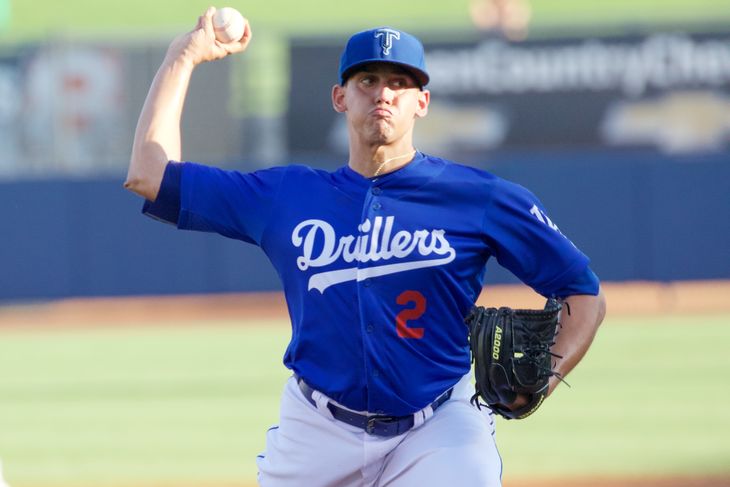
Chosen by the Dodgers in the first round of the 2014 MLB draft, 20-year-old pitching sensation Grant Holmes continues to climb the ranks, and hopes to impress scouts and coaches after being promoted to High-A Rancho Cucamonga to begin the 2016 campaign.

Continue reading “Dodgers Prospects: Grant Holmes Progressing Nicely”

Trayce Thompson Amidst Immense Career Chance

trayce_o6yewoiq_pxqjpm8h(Photo Credit: mlb.com)

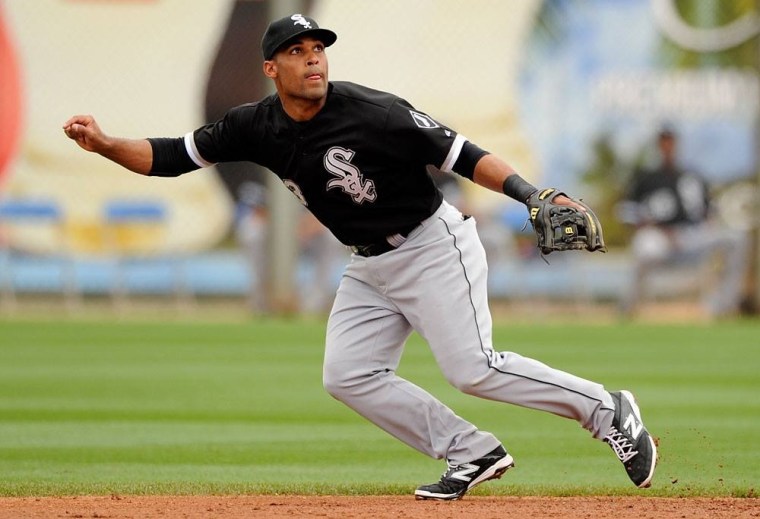
After a seemingly endless seven years in the Chicago White Sox farm system, Dodgers’ rookie Trayce Thompson is finally living his dream as a starting outfielder, and if his early performances are any indication of the future, may conceivably stick to the big league, 25-man roster over the long haul.

With both Carl Crawford and Scott Van Slyke on the 15-day disabled list suffering back problems, Thompson was the easy choice for the starting nod in left field. Even when lefty-killer Enrique Hernandez is inserted into the outfield lineup to get his share of hacks, Thompson can be shifted to any of the three outfield spots, as his defense is undoubtedly the strongest point of his game.

Continue reading “Trayce Thompson Amidst Immense Career Chance”

Dodgers Eager to See Frankie Montas Compete

15083223714_5287230b70_o_i31z231h_wl1v7xzb

(Photo Credit: Jason Wise/MLB.com)

Although he’s still not yet close to any type of official rehab assignment, the Dodgers remain confident that hard-throwing righty Frankie Montas will recover fully from surgery, and hope that he’ll make an impact at the big league level at some point during the 2016 season.

Continue reading “Dodgers Eager to See Frankie Montas Compete”

Projecting the Starting Rotation at Oklahoma City: Final Edition

JulioUrias1280_zlr77p3x_2q7jxxeo(Photo Credit: mlb.com)

When the Los Angeles Dodgers’ 25-man roster became official on Sunday morning, everybody connected to different levels of the farm system began scrambling to assemble the building blocks to each of their respective squads.

With the big league starting rotation finally set, scouting directors, managers and coaches at Oklahoma City are sifting through all the remaining uninjured players, and will indeed announce their own 25-man roster, including a starting pitching rotation, sometime before Opening Day on April 7.

Continue reading “Projecting the Starting Rotation at Oklahoma City: Final Edition”

Yadier Alvarez Impresses Dodgers Scouts Early

Yadier_Alvarez_sw8wqr6r_wbdf0u4l(Photo Credit: Bill Mitchell/milb.com)

When we initially took a glance at pitching prospect Yadier Alvarez back in December, he didn’t have much of a track record in terms of organized baseball, and it remained somewhat of a mystery the exact type of skill set he would bring along with him to the farm. Moreover, due to visa issues at the time, nobody within the Dodgers‘ organization had a firm idea as to when he would arrive stateside.

Continue reading “Yadier Alvarez Impresses Dodgers Scouts Early”

Dodgers Prospects: Caleb Dirks Making His Mark on the Farm

caleb-dirks-2015-tomo-san.0

Further exploring the seemingly infinite amount of talent in the Los Angeles Dodgers‘ farm system, we once again stumble across the bullpen, where the organization appears to be growing stronger with each passing season.

Last month, we took a look at the rapid advancement of hard-throwing righty Jacob Rhame. Today, we’ll take a quick glance at another youngster frequently mentioned around Camelback Ranch this spring — right-handed reliever Caleb Dirks.

Dirks was born in Arcadia, California and attended Woodcrest Christian School in Riverside — a stone’s throw away from LoanMart Field in Rancho Cucamonga.

After high school, Dirks attended California Baptist University, culminating his senior season with a 4-1 record, a 2.85 ERA and PacWest Academic All-Conference honors.

His collegiate teammate, Trevor Oaks, was selected by the Dodgers in the seventh round of the 2014 draft; and as the later rounds passed, Dirks kept his fingers crossed hoping that he too would join Oaks with the Dodgers. His wish never came true, however; as he was ultimately chosen in the 15th round by the Atlanta Braves.

During his initial year in the Atlanta organization, Dirks began with the Danville Braves in rookie league, where he posted a 0.96 ERA and a 1.18 WHIP along with 16 strikeouts in just over nine innings of work.

Valuing his success in the bullpen, the Braves quickly promoted him to low Class-A Rome that same season. While in Rome, Dirks pitched 23 innings over 14 appearances with a 2.74 ERA and 21 strikeouts.

He returned to Rome to begin the 2015 campaign, and after only 10 appearances and an ERA of 1.80, was quickly ushered to the High-A Carolina Mudcats‘ bullpen. With the Mudcats, he pitched 16.2 innings over 11 appearances giving up only eight hits and no earned runs while striking out 18 batters.

Then came the trade.

On July 2 of last year, the Dodgers traded their 87th international bonus pool slot to the Braves for Dirks and minor league outfielder Jordan Paroubeck.

There was enough time remaining in the 2015 season for a quick stop with the Quakes and eventually a promotion to Double-A to finish the year with the Drillers.

For Rancho Cucamonga, Dirks appeared in 10 innings over nine games, recording a 0.90 ERA and a .998 WHIP while ringing up 18 strikeouts and allowing just one earned run. He closed out the season by posting a 1.35 ERA, a .975 WHIP, and fanning 17 batters in just under 14 innings of work in Tulsa.

Still only 22 years old, his quick success in the minors earned him a non-roster invite to the Dodgers’ 2016 spring training camp in Glendale.

Dirks doesn’t throw as hard as Rhame, but can still dial up his heater to about 94 MPH consistently. He compliments his fastball with a solid average slider and changeup. He patterns all his pitches off his fastball, and throws everything from the same arm slot. He uses his 6’4″, 225 lb. frame to create a very unorthodox, yet deceptive delivery, employing a hop-like motion as he pushes off the rubber. He keeps the ball hidden until the very last moment of the release point. His fastball doesn’t have a ton of movement, but his location points are strong, nonetheless.

While he pitches toward the back of the bullpen in the minors, his upside is more likely that of a middle reliever when he’s called up to the bigs.

Dirks fought through back issues early in camp, and although he didn’t officially appear in any Cactus League games, he was able to log some very valuable bullpen sessions and simulated situations, with the likes of special assistant Greg Maddux, pitching coach Rick Honeycutt and bullpen coach Josh Bard watching him throw and offering feedback.

“I focused on trying to get ahead early in counts, and then with two strikes whether to go fastball up or to use my slider,” Dirks told Eric Stephen of True Blue LA. “For me the biggest thing is just getting ahead early and staying on the attack, not trying to be too fine around the zone, and not putting the hitters in hitters’ counts, because that’s when it can be difficult to pitch.”

Dirks was among the first wave of players cut and reassigned to minor league camp on Monday, but similar to any ambitious young hurler, found the spring experience to be invaluable. The opportunity to spend time with the big league coaching staff and veteran relievers like J.P. Howell, Kenley Jansen, Jamey Wright and Joe Blanton will prove to be extremely beneficial down the road.

Dirks will likely head to the Oklahoma City bullpen to begin the regular season, and depending on the health of the Dodgers’ relievers throughout the year, could conceivably see major league action at some point in 2016.

(Photo Credit: Tomo San/LA Dodgers)

Dodgers Prospects: Will Micah Johnson Finally Break Through?

image-46

Being familiar with the Los Angeles Dodgers organization for over thirty years, it’s very difficult to remember a time when the team had as much depth as it does now. In the past, it seemed as if the club was abundantly stacked at one or two positions (starting pitching always being the most unmissable), but heading into the 2016 campaign, the Dodgers appear to be well rounded at almost every spot on the field.

Some positions are deeper than others, but one of the deepest spots on the diamond right now could very well be second base.

At the beginning of the winter, after Howie Kendrick elected to test the free agent market, it looked as if incumbent utility man Enrique Hernandez had a legitimate claim to man the keystone. However, concerned with Hernandez’s past success against right-handed pitching, the club re-signed Chase Utley, which created a presumable working platoon at second. At that point, it appeared the Dodgers were set at second base, with the future looking even brighter as Jose Peraza continued to climb the prospect rankings.

Then came the three-team deal with the Reds and White Sox in December which netted the Dodgers second baseman Micah Johnson, outfielder Trayce Thompson and pitcher Frankie Montas. Third baseman Todd Frazier landed in Chicago, while the Dodgers sent Peraza, outfielder Scott Schebler and infielder Brandon Dixon to Cincinnati. All three prospects the Dodgers scored were very much considered to be MLB-ready.

All at once, the Dodgers became even deeper in terms of reserve players and minor league depth.

Subsequently, when the bottom fell out of the second base free agent market, the Dodgers were able to bring back Kendrick on a very economical two-year deal. There was talk about both Kendrick and Utley possibly getting time at third base, but the consensus around camp right now is that they’ll share time at second, while Hernandez likely slips back into his super-utility role.

mjdodgers

So where does that leave Micah Johnson?

When healthy, the presences of Kendrick and Utley keep him in Oklahoma City, but at the first sign of injury, Johnson will be among the first players to get the call to help man second base. Outside of providing secondary depth, the Dodgers’ immediate interest in Johnson could be for his speed on the basepaths, and for his usefulness in late game situations as a pinch runner once rosters expand, or maybe even in the playoffs.

Johnson’s best assets by far are his overall speed and his quick first step. His run tool is rated a 75 on the 20-to-80 scouting scale. Johnson was successful on 28 steals in 35 attempts at Triple-A in 2015, and stole as many as 84 bases in 2013 between Single-A Kannapolis and Double-A Birmingham. In 143 career games at the Triple-A level, he swiped 40 bases in 53 attempts (75.5 percent).

In terms of offense, Johnson has always found success at Triple-A, but hasn’t found much consistency in his limited time in the majors. He hit .315/.375/.466 in 78 games in Triple-A Charlotte last year, then hit .230/.306/.270 in his first 36 games in the bigs.

In the majors and minors combined in 2015, Johnson hit .300/.366/.455 against right-handed pitching and .287/.347/.346 against lefties.

The biggest knock on Johnson so far during his young career has been his defense, but according to his own accounts, what was once considered a small throwing hitch by scouts snowballed into a stereotype that he is error-prone with his glove.

“I know there were some things [the White Sox] wanted me to clean up, like turning a double play, but that was all because I had a hitch in my throw. That had nothing to do with my footwork, my hands. Routine plays have never been an issue. I field those fine. I get the outs,” Johnson said.

“I think some people get that confused, like, ‘Defensively, he makes errors’ or something like that. That’s not the case at all. I just had a little hitch in my throw and some double plays didn’t get completed. This offseason, I cleaned that hitch up. I had a couple months to just work on my throwing, short compact throws, using my torque and my body.”

Dodgers’ manager Dave Roberts has a keen interest in Johnson, and thinks his best chance to stick might be as a second base/outfield utility role player.

“Micah is a dynamic player, he’s an interesting player,” Roberts said. “He is continuing to work on the defense and he’s taking balls in center field. He can run. He has that dynamic speed that we really don’t have, so a lot of times young players start to get ahead of themselves. We’ve talked about how it’s just a matter of him performing.”

When asked about what qualities he brings to a team that’s already two to three players deep at most positions, Johnson was quick to point out his aggressiveness with his bat and on the bases.

“I play the game the right way. I play hard, play to win. The numbers take care of themselves. If a runner’s on second base, nobody out and I bunt — can I get a hit out of it? Runner on third with less than two outs, my job is to bring him in somehow, some way. Even first and third with less than two outs, if I put the ball in play, it’s going to be hard for them to get a double play. When I put the ball in play, I know my game and I focus on winning the game and the numbers take care of themselves.”

Johnson realizes that both Kendrick and Utley have him blocked for the early part of the season, but he’s staying focused on winning and remains confident about his chances on contributing to the big league squad in some capacity.

“Everybody [in big league camp] has the sense that everybody’s going to contribute at some point toward the ultimate goal to win the World Series,” Johnson said. “If we win the World Series and you helped the team win three or four games, then you helped them win. There’s not much disunity between what level you’re supposed to be at and who you are. No one cares about that. … There’s not very much I want to accomplish except winning: ‘What did I do to help us win?'”

(Photo Credits: whitesoxpride.mlblogs.com & Joe Camporeale/USA TODAY Sports)

There’s (Some) New Kids in Town

cody-bellinger-hitting-2014-raptors-noall-knighton.0.0

“There’s talk on the street; it sounds so familiar
Great expectations, everybody’s watching you
People you meet, they all seem to know you
Even your old friends treat you like you’re something new.” ~Glenn Frey/Don Henley

Anyone paying a half bit of attention has noticed that there are quite a few names making noise in the Dodgers‘ spring training camp this year. Some are becoming famous on Twitter, such as Cody Bellinger for his quest to get to 10,000 followers (#CodyLove), Jack Murphy for his amazing hair, and Charlie Culberson for his sky high batting average. Others are opening eyes with their speed (Rico Noel), or clutch hitting like Rob Segedin. I thought I’d take a quick look at some of this newfound depth the Dodgers have.

Cody Bellinger – Cody is a left-handed first baseman who was drafted by the Dodgers in the fourth round of 2013 draft. Bellinger is the #6 ranked Dodgers prospect on MLB Pipeline. He has spent the last two years with Ogden and Rancho Cucamonga, where he was selected to both the mid-season and postseason All-Star teams.

He has a wonderful progression, hitting three homers in 2014, and 30 in 2015, which he attributes to fine-tuning his swing mechanics and putting some weight on his 6’4″ frame. He seems to be the heir apparent to Adrian Gonzalez at first base. Bellinger was given his first non-roster invite to spring training this year where in five games, has a .667 average with a 1.394 OPS. (Dennis composed a profile on Bellinger back in December)

Charlie Culberson – Culberson is a right-handed hitting utility infielder who was drafted by the San Francisco Giants in the first round of the 2007 draft. He was traded to the Colorado Rockies straight-up for Marco Scutaro in 2012. He was eventually called up to the majors on July 29, 2013, platooning with Corey Dickerson in left field. Culberson signed a minor league contract, which included a spring training invite, with the Dodgers last November. He started off incredibly hot, and through six Cactus League games he has a .700 batting average and 2.000 OPS.

Jack Murphy– Murphy is a doppelgänger of Oakland A’s pitcher Dennis Eckersley — long wavy hair and a fantastic mustache. Murphy came from Toronto in the trade that saw Darwin Barney depart Los Angeles. The switch hitting catcher attended Princeton University and has played the last three offseasons with the Canberra Calvary in the Australian Baseball League, where he was named both their MVP and Silver Slugger in the 2014 season. In three games this spring he is batting .500.

ABL_CAN_SYD_G4_0030_xa4yznop_dcmvzfqi

Rico Noel – Jablonski Rico Noel was drafted in the 2010 MLB draft by the San Diego Padres. He stole 90 bases in 2012 with the Lake Elsinore Storm in the Class A-Advanced California League. He was in Triple-A in 2015 with the Padres, but ultimately asked to be released. After signing a new deal with the Yankees, he was promoted to the majors on Sept 1, 2015. He hit a single in his first plate appearance and stole five total bases for New York last season.

Noel was removed from the Yankees’ 40-man roster over the winter, eventually signing with the Dodgers to a minor league contract with an NRI to spring training. In eight games this spring, he’s only batting .222, but has stolen three bases. He could make a great late season call up, especially considering manager Dave Roberts‘ philosophy of manufacturing runs.

Rob Segedin – Segedin is a right-handed hitting corner infielder/outfielder who’s career has been plagued by injuries. He has suffered from Pars Defect, a stress fracture in the vertibrea of the spine, in addition to femur defects that saw him undergo labrum surgery and having the bones of his hips shaved. He was heathy through 2014, but sprained his wrist in 2015 going into the stands after a ball.

Segedin came to the Dodgers over the winter via trade with the Yankees for Ronald Torreyes and Tyler Olson. He’s off to a hot start in spring training, having a two-homer game and batting .313 with a 1.228 OPS. Playing first, third and the outfield, he figures to start at third for Oklahoma City, and be there waiting in the wings if injuries begin to plague the infield.

Trayce Thompson – Selected by the Chicago White Sox in the second round of the 2009 draft, Trayce played most of his career in the minors, being promoted to the Majors on August 3 2015. On December 16, 2015, he was traded to the Dodgers along with Frankie Montas and Micah Johnson in a three team trade that included the Cincinnati Reds sending Todd Frazier to Chicago and three players from LA to the Reds.

Trayce, as has been widely reported, is the brother of 1/2 of the Splash Brothers, Klay Thompson and son of former NBA player Mychal Thompson. He is the Dodgers #15 ranked prospect by MLB Pipeline and has played in seven of eight spring training games. An outfielder, he is poised to be in contention for Carl Crawford‘s spot of the roster should Crawford continue his decline in play.

While all stats in spring training should be taken with a grain of salt, it is safe to say that the Dodgers have players that have added excellent depth for this year and for years to come.

(Photo Credits: Noall Knighton/Ogden Raptors & Ben Southall/SMP Images)

Projecting the Starting Rotation at Oklahoma City: Second Edition

Jose-De-Leon

When we last explored the projected starting rotation at Oklahoma City in December, the Dodgers’ big league rotation was trending towards being on the thin side, while the Triple-A rotation looked to be crowded. Now, with spring training upon us, things seem to have leveled out a bit.

Since our last analysis, the Dodgers bolstered their starting rotation by adding veteran lefty Scott Kazmir, as well as Japanese righty Kenta Maeda. Brandon Beachy was also brought back on another one-year contract, hoping to create depth for a rotation that currently projects to include four left-handed starters and one right-hander.

The Yasiel Sierra signing finally became official; and although he projects to be a potential middle-reliever in the bigs early in his career, he may see time as a starting pitcher in the minors, at least in the beginning of the season.

Joe Blanton was signed to a one-year deal last month to be utilized as a long man in the bullpen, which may affect the role of Carlos Frias early in the year. Frankie Montas, who was projected to see some time as a starter in the minors, was moved to the 60-day disabled list after having rib resection surgery.

Finally, the trade that sent Joe Wieland to the Mariners on January 12 created space on the 40-man roster and provided a bit of breathing room for the rotation at OKC.

All that being said, here’s a list of the potential pitchers vying for a rotation spot in Oklahoma City in 2016. Also included are the pitchers’ ages come Opening Day, the number of option years they have remaining and a brief commentary as to where they may begin the season.

  • Brandon Beachy – 29 years, no options
  • Mike Bolsinger – 28 years, one option remaining
  • Carlos Frias – 26 years, one option remaining
  • Zach Lee – 24 years, two options remaining
  • Ross Stripling – 26 years, all three options remaining
  • Yaisel Sierra – 24 years, all three options remaining
  • Jharel Cotton – 24 years, all three options remaining
  • José De León – 23 years, all three options remaining
  • Julio Urias – 19 years, all three options remaining

Although José De León and Julio Urias are arguably the two most talented pitchers on the list, neither is on the 40-man roster, and may not see big league action until rosters expand in September. De León is fully developed and is considered by many to be MLB-ready, while Urias likely needs one additional season on an innings count due to the fact that he’s still maturing physically. Barring injury, both should hold down spots in the Oklahoma City rotation for the majority of the season.

Jharel Cotton had been a starter most of his career, but was given an opportunity to relieve late last season when the Triple-A bullpen was very thin. He probably has the best changeup in the Dodgers’ entire system, and projects better as a starter due to the lack of velocity on his fastball (90-91 MPH). His breaking pitches are his best weapons, leading him to a 10.7 K/9 in almost 100 innings of work last year. Still, with the rotation being as crowded as it is and the bullpen on the thin side, Cotton may begin the season as a reliever.

Beachy and Mike Bolsinger will certainly be the first two to be called upon if the Dodgers need help. After returning from Tommy John last season, Beachy pitched 47 innings over 10 appearances at OKC. When given the opportunity in the bigs, he surrendered 10 hits and seven runs in two appearances. Bolsinger ended up contributing 109 innings over 21 starts for the Dodgers, compiling a 6-6 record with a 3.63 ERA and a 8.1 K/9. Both project to be the front-line starters for Oklahoma City.

Former first-round draft pick Zach Lee had a rough debut for the Dodgers against the Mets last July, but put up solid numbers in Triple-A over the course of the season. He compiled a 11-6 record while throwing 113 innings over 19 starts, which led to a 2.70 ERA and a 1.11 WHIP. He also likely fills a starting slot for OKC.

Ross Stripling returned from Tommy John and pitched 67 innings over 13 starts for the Tulsa Drillers last season. He was added to the 40-man in November to protect him from Rule 5 status. Stripling isn’t overpowering, but features a nasty arsenal of breaking pitches much like Bolsinger. Stripling has never thrown at the Triple-A level, and may begin the year at Tulsa just to make room for everyone else at Oklahoma City.

While considered to be MLB-ready by most scouts, the prudent avenue for Sierra would be to begin the year in the minors, if only for reasons of getting acclimated to his new country. Over five seasons in Cuba’s Serie Nacional, he went 16-21 with 25 saves and a 4.23 ERA in 131 games which included 25 starts. Sierra most likely starts the season at Tulsa.

Frias made 17 appearances including 13 starts for the Dodgers last season, hurling 77.2 innings to a tune of a 4.06 ERA. Blanton may command the role of long man early in the year for the Dodgers, but depending on the health and effectiveness of the remainder of the relief corps, Frias should see big league action at some point in 2016. As for the beginning of the season, he most likely gets the nod as long man and/or spot starter for OKC.

Depending on the health and progression of lefty starter Hyun-jin Ryu at the beginning of the season, Alex Wood could see time in the minors if the Dodgers’ rotation stays healthy, only because he’s one of the few that has options remaining on his contract. We do have a few ideas how this may play out, however; and we’ll be providing additional insight and commentary later in the week.

In light of everything discussed, we see things at Oklahoma City shaping up something like this:

  • OKC starting rotation: Beachy, Bolsinger, Lee, De León and Urias; with both Frias and Cotton in the bullpen
  • Stripling and Sierra beginning the year at Double-A Tulsa but rising quickly

If healthy, the 2016 Triple-A rotation may very well be the deepest and most talented that Dodger fans have seen in many, many years. Beyond that, the next wave of talent is beginning to blossom and shine in Single-A and rookie ball.

Right now, the Dodgers’ future seems to be extremely bright — at least on the pitching front.

(Photo Credit: Rich Crimi/Tulsa Drillers)

Dodgers 2016 Top Prospects by Position

urias1280_ia7bt3br_s1tza91n (1)

As the accolades continue to accumulate for the Los Angeles Dodgers on the prospect front, we thought it would be both interesting and insightful to have a look at the current top prospects at each position on the field.

Up until a few seasons ago, this list would have been very difficult to compile, as the Dodgers’ farm was extremely top-heavy with pitchers and outfielders. Today, as indicated by their favorable rankings by the top publications, the Dodgers not only have one of the best farm systems in baseball, but probably one of the most versatile as well.

These opinions are mostly subjective and original, and aren’t sanctioned or endorsed by any group or entity other than us here at this site. Here’s a quick peek at our top Dodgers prospects by position:

  • C – Austin Barnes
  • 1B – Cody Bellinger
  • 2B – Micah Johnson
  • SS – Corey Seager
  • 3B – Brendon Davis
  • OF – Trayce Thompson
  • OF – Alex Verdugo
  • OF – Yusniel Diaz
  • LHP – Julio Urías
  • RHP – José De León
  • RP – Jacob Rhame

Austin Barnes is the obvious heir apparent to veteran catcher A.J. Ellis, and will most certainly see additional big league action at any sign of injury to either Ellis or Yasmani Grandal. With the catching position being one of the few spots in the organization without much depth, many say that Barnes could be one of the most valuable players on the farm. Evan Bladh of Opinion of Kingman’s Performance recently put together a quality piece that further illustrates Barnes’ value.

At age 20, Cody Bellinger has already exhibited tremendous talent both with the bat and the glove, and will have an opportunity to shine as a non-roster invitee at this season’s spring training in Glendale. Bellinger still has a long way to go as far as physical development, but he showed a bit of a power surge last season for High-A Rancho Cucamonga, having mashed 33 doubles, 30 HR and 103 RBI. TBPC compiled an in-depth profile of Bellinger back in December.

Upon being acquired from the White Sox last December, it may have been safe to assume that Micah Johnson would have probably worked his way into the Dodgers’ lineup at some point during the 2016 season. Now, with Howie Kendrick, Chase Utley, Enrique Hernandez and Elian Herrera all on call to man second base, Johnson may have to wait until rosters expand in September to make his Dodgers’ debut. David Hood of True Blue LA compiled an informative piece regarding Johnson a few months back in his Dodgers’ prospect rankings series.

Since his Little League days, Corey Seager has exhibited immense success at every single level of baseball at which he’s competed. The consensus 2016 Rookie of the Year has recently been ranked the #1 prospect in baseball by the four major publications — Baseball America, Baseball Prospectus, MLB Pipeline and ESPN. While he will be playing under a microscope, Seager certainly has the tools to exceed all expectations.

For many years, third base has been the biggest void in terms of notable prospects in the organization. The latest (albeit several years ago), most-talked about minor league player to have his name thrown around at the hot corner was Pedro Baez, who most recently found success in the Dodgers’ bullpen. Today is no exception — there’s nobody that really stands out amidst the Dodger youth. We chose Brendon Davis here, as there’s been plenty of chatter about moving him to third from his natural shortstop spot, while his 6’4″ frame continues to develop. Kyle Farmer, a catcher by trade, has also recently spent time at third in an effort to build some type of minor league depth.

At 19 years of age, outfielder Alex Verdugo is one of the younger prospects to receive early recognition. Chosen in the second round of the 2014 draft, Verdugo has already advanced to High-A ball, as he continues to impress scouts with his bat speed and strength. He has the quickness and range to man center field; yet with a cannon for an arm, may eventually profile better in right. If he ever needs to fall back on pitching, he has a fastball that has reached 94 MPH, as well as a plus curveball and a quality changeup.

Like Johnson, Trayce Thompson was acquired from the White Sox in the three-team deal last December. There’s no question that Thompson has the tools and athleticism to succeed at all three of the outfield spots; however, after seven seasons in the minors, he’s yet to take that gigantic step forward. Still, he’ll be the first outfielder called upon from OKC when additional depth is needed in the bigs. Amanda Howell of Dodgers Way took a closer look at Thompson just a few days ago.

Yusniel Diaz, also 19 years of age, was signed by the Dodgers after he defected from Cuba last April. Diaz hit .348/.448/.440 in 2014-15 as an 18-year-old in Cuba’s top league, the Serie Nacional, and was the favorite to win Rookie of the Year honors before he left the country. Similar to Verdugo, he has the quickness to primarily handle center field, but his pure athleticism gives him the capability of succeeding at all three outfield spots.

Julio Urias, another 19-year-old, has long been considered the bread and butter of the Dodgers’ farm. He made his rookie league debut at the age of 16 with Great Lakes in 2013, and outside of having eye surgery and strict innings counts, hasn’t really had any setbacks. With a fastball that occasionally touches 98 MPH, a plus curveball and a very deceptive changeup, he has all the attributes that an organization desires in an ace. Ben Ellenberg of Outside Pitch discussed Urias a few weeks ago.

Up until last summer, José De León wasn’t even on the radar of any type of prospects list. However, after perfecting his changeup and climbing through both the High-A and Double-A levels, he’s now recognized as among the best right-handed starting prospects in the game. De León’s fastball, which has nasty, late movement and sits in the 93-96 MPH range, is by far his best weapon. His slider rates a little above-average but continues to improve. His changeup is by far his best off-speed pitch — he’s not afraid to use it when behind in the count and often uses it as his strikeout pitch. TBPC profiled De León in December.

The bullpen position was probably the toughest to choose among all the spots. Because Frankie Montas — who may even be utilized as a starter in the future — has experienced a setback with rib surgery, we chose Jacob Rhame based on his arm’s electricity alone. Jharel Cotton and Chris Anderson were also considered. Rhame’s strongest pitch is his four-seam fastball which sits at 95-98 MPH and peaks at 100 MPH. He equally mixes a cutter in the low 90s that offers plenty of movement. He also throws a really hard slider, which is recognized more for its velocity than break. He’s currently working on a change-up as a weapon used primarily against left-handed hitters. TBPC took a close look at Rhame back on February 5.

As non-roster invitees, Urias, Rhame, De León and Bellinger will begin camp with the big league squad at Camelback Ranch. In Cactus League play, Urias will wear number 78, Rhame 79, De León 87 and Bellinger 61. Barnes, Johnson and Thompson, already members of the 40-man roster, will wear numbers 28, 11 and 21, respectively. Seager will wear his normal number 5.

Pitchers and catchers report on February 19 and their workouts will begin February 20. Position players report on February 24 and the first full-squad workout will take place February 25.

(Photo Credit: mlb.com)