Dodgers’ Youth Poised to Man 2016 Bullpen

chris-hatcher-ftr-0406-gijpg_e7c5e6sfkc7814vn96nuf8wq0

After primarily focusing on starting pitching and other numerous depth pieces so far this winter, the Los Angeles Dodgers‘ roster is beginning to get the feel of being almost complete and polished enough to contend for a pennant in 2016.

One area that still may be a concern in the eyes of many fans is the bullpen. On paper, it really doesn’t look all that bad, but based on injury potential and the results of seasons past, one or two solid upgrades could set the Dodgers apart from the rest of the division.

Notice the operative word is “solid.” Every year it seems the front office takes a gamble on a handful of NRIs hoping that one of them has rediscovered themselves and potentially makes a difference in the pen. Last year it was David Aardsma, Mike Adams, Ryan Buchter, Chad Gaudin, David Huff, Ben Rowen and Sergio Santos, but in the end none proved to be valuable enough to contribute for the duration of the season.

The high-profile veteran arms on the free agent market are always another option, but based on the salaries awarded for the talent that was available this offseason, it’s understandable that the Dodgers have passed on the bigger names. Run-of-the-mill relievers like Darren O’Day, Joakim Soria, Tony Sipp, Steve Cishek and Ryan Madson have all signed lucrative, multi-year deals, but erring on the side of caution with this group seemed to be the wisest choice for the Dodgers.

At one point, imagining Aroldis Chapman bringing up the rear of the Dodgers’ bullpen made every fan’s heart flutter with anticipation; however, the front office eventually used its best judgement and declined a surefire trade. Firemen like Jake McGee and Andrew Miller were also thought to be available in prospective deals, but ultimately their respective teams wanted a ton more than what they were perceived to be worth.

With a few exceptions, internal options always proved to be gold mines for the Dodgers, especially in the bullpen. With veterans Juan Nicasio and Joel Peralta having been swept aside, the Dodgers will need the youth to step higher. Considering the wealth of talent on the farm, it may not even be an issue.

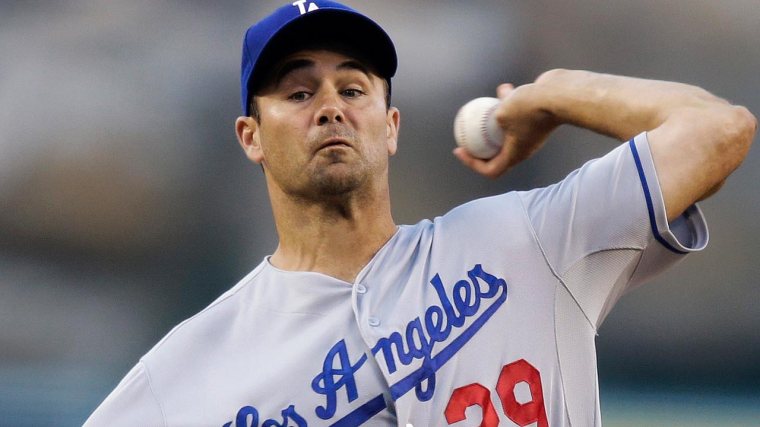
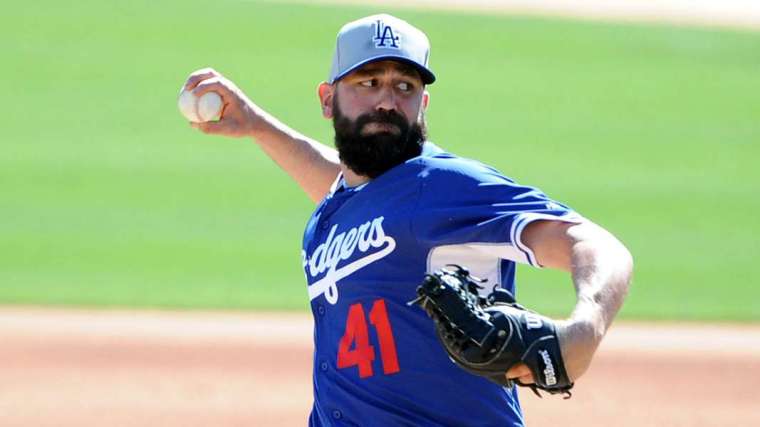
Assuming the Dodgers utilize a seven-man pen to open the season, the current lineup features Carlos Frias, Yimi GarciaLuis Avilan, Pedro Baez, Chris Hatcher, J.P. Howell and Kenley Jansen. This group is very young in itself, with everyone except Howell and Hatcher being 28 years old or younger.

Adam Liberatore, Josh Ravin and Ian Thomas are waiting in the wings if needed, but the real talent may lie even deeper in the farm system.

The Dodgers’ brass seems intent on trying new additions Frankie Montas and Yaisel Sierra as starters, but based on reported fastball velocities and other factors in scouting reports, their underlying talent may eventually reveal bullpen potential.

Jharel Cotton and Chris Anderson were also utilized as relievers late last year, and may be used in similar roles in 2016 based on the congestion in the starting rotation at Oklahoma City.

In light of everything mentioned above, the Dodgers have a multitude of talent available to contribute the bullpen — at least on paper. Looking towards the future, 2017 seems to be stacking up to be even more exciting, and could possibly feature a starting rotation and a bullpen rising towards being the best in the bigs.

After all, that was the plan all along.

(Photo Credit: sportingnews.com)
Dodgers Lineups: Who Bats Leadoff in 2016?

yasiel-puig-mlb-los-angeles-dodgers-san-francisco-giants-850x560

As the concept of the true leadoff hitter seems to be trending towards being a forgotten commodity in today’s sabermetric game, the 2016 Los Angeles Dodgers, like last year, give the impression of being one of those teams that puts little emphasis on having a legit speed burner at the top of the batting order.

The Dodgers’ rich heritage has seen players like Junior Gilliam, Maury Wills, Davey Lopes, Steve Sax, Brett Butler, current manager Dave Roberts and most recently Dee Gordon wreak havoc on the basepaths — bunting for base hits, swiping bags, and using that extra quickness to go from first to third or second to home when the squad needed it most.

Nowadays, statistics like oWAR and OPS+ exist to tell us that some of the best leadoff hitters in baseball are worth less than most average players in terms of wins and runs added to the team.

The role of the leadoff hitter is being redefined by many of today’s managers, coaches and front offices. Analytics have shown that getting on base more frequently and hitting the ball harder are actually more beneficial to a team’s success than the traditional values and perceptions.

In the same sense,  the customary duties of first base coaches like Lopes also show signs of changing.  In each of his three seasons in Philadelphia, the Phillies led the majors in stolen base percentage, including 87.9% (138-for-157) in 2007 — the best in MLB history. In contrast, the Dodgers, like many other clubs, haven’t gotten anywhere near those numbers in recent years, and don’t forecast to do so considering the departure of Gordon after the 2014 season.

Regardless, the critical point remains the same as it was 50 years ago — leadoff hitters need to get on base to create runs. And the players the Dodgers used last year — Jimmy Rollins, Joc Pederson and Yasiel Puig, for example — were very inconsistent in finding ways to get on base when the team needed it most.

New additions in Micah Johnson and Trayce Thompson may actually profile better hitting leadoff than many others on the Dodgers’ roster, but projections are difficult to make based on their limited time in the bigs. Still, room would need to be created on the 25-man roster for either one by trading away or DFA’ing one or more veteran players who may be considered less valuable.

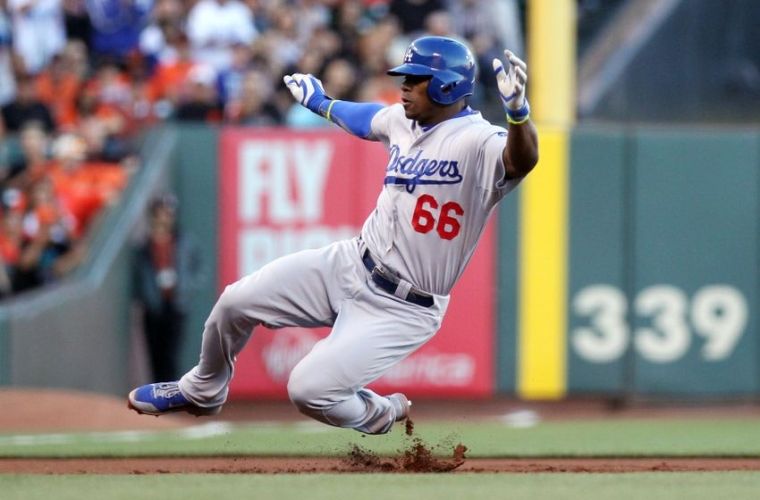
Based on potential alone, Puig seems to be the logical choice to assume the leadoff spot heading into 2016, but health, making contact with the ball, and on-base consistency will be the chief factors in determining his role in the lineup moving forward.

If able to rediscover his swing and reduce his strikeout rate from last season, Pederson may also be given another opportunity to bat first.

The good news is Roberts will have 33 Cactus League games to experiment and analyze which lineup combinations will be best for the club to begin the season. First base coach George Lombard and third base coach Chris Woodward also bring fresh perspectives in terms of improving run production.

All that being said, there’s still time for the front office to make an additional move or two to fill a few minor needs and change the complexion of the squad even further.

The Dodgers open Cactus League play against the White Sox on March 3.

(Photo Credit: Lance Iversen/USA Today)

Recalling the Dreadful Winter of 2010-11

lilly_1280_xxs08kso_ztjnxim8

With spring training rapidly approaching, fans around Dodgertown are still a bit distressed with the way the roster is shaping up for 2016. People are insisting that additional bats and bullpen arms are needed to contend, but considering the state of the franchise five years ago, things aren’t really as bad as they seem.

When November rolled around in 2010, ex-owner Frank McCourt was smack-dab in the middle of a horrific divorce, and based on the daily operations of the club that were visible to the public, the budget was extremely limited.

Joe Torre presumably sensed where the Dodgers were headed and decided to retire from managing completely, passing the reigns to Don Mattingly. After soaring to the NLCS in both 2008 and 2009, a downward trend was beginning.

Much to the dismay of many fans, Russell Martin was non-tendered. Assistant GM Kim Ng left for greener pastures. Brad Ausmus retired. Team psychic, magician and healer Vladimir Shpunt vanished. The roster was in shambles.

McCourt even went as far to sever ties with team president Dennis Mannion in an attempt to save money.

Former GM Ned Colletti took the funds that were allotted to him and attempted to spend wisely. He made what he thought were big splashes by signing Juan Uribe, Ted Lilly, Jon Garland and Matt Guerrier — all to multi-year deals.

Aiming to make the roster functional with hardly any money remaining, Colletti scored a group of low-cost, one-year contracts with scrappy, gritty veterans like Aaron Miles, Marcus Thames, Eugenio Velez, Dana Eveland, Juan Castro, Tony Gwynn Jr., Ron Mahay, Juan Castro, Mike MacDougal and Gabe Kapler.

On top of that, the Dodgers still owed money to Manny Ramirez, Juan Pierre, Andruw Jones and Jason Schmidt.

In terms of the minors, the farm system “seemed” to be in good order. John Ely and Carlos Monasterios were poised to anchor the back end of the starting rotation. Prospects were emerging — big things were expected from Jerry Sands, Russ Mitchell, Ivan DeJesus Jr., Justin Sellers, Kenley Jansen and Rubby De La Rosa.

In the end, the 2011 Dodgers were 82-79 and finished third in the NL West. Maybe it was the divorce. Or the lack of talent. Perhaps the management was incapable. Or maybe it was a whole lot of bad luck.

Regardless of those days, the Dodgers seem to be on the upswing. Sweeping changes have been made since that time. Only four players on the 40-man roster remain from 2011 — Clayton Kershaw, Jansen, Andre Ethier and A.J. Ellis.

Even coaches Tim Wallach and Davey Lopes, always fan favorites, have pursued other interests — nobody at all saw that coming.

In any case, three divisional titles have been won, and the franchise seems to be in much better position to go one step further. Hopefully for the sake of the fans, the players and the ownership group, that day comes soon.

In the meantime, perhaps everyone in Dodgertown should be grateful for the team’s current state of affairs.

Another winter like 2010-11 would be a total nightmare.

(Photo Credit: mlb.com)

Why the Dodgers Should Consider Signing Juan Uribe

tommy-lasorda-juan-uribe-mlb-atlanta-braves-los-angeles-dodgers1-850x560

While the Los Angeles Dodgers‘ front office continues to mold the 2016 roster, it’s safe to assume that more changes will occur and additional moves will be made before pitchers and catchers convene next month.

One recurring theme across this blog over the winter has been infield depth. The more we write about it, the more worrisome it becomes — especially at shortstop.

For many years into the future, the Dodgers are set with Corey Seager at short. Well, at least a few years, anyway, before the chatter emerges once again about a potential move to third base because of his size, range or whatever else critics decide to pin on him. But all that is beside the point.

Two areas of concern may need to be addressed.

First, who backs up Seager?

In light of the modern game, there’s no way Seager takes the field 162 times this year. Rest is needed. Injuries and sickness will happen, hopefully minor. All fingers are crossed to ensure he stays consistent and productive over the course of the season, but cover is required nonetheless.

We already discussed the possible roles of Enrique Hernández heading into 2016, and realistically, covering second, short, third base and center field may be a bit too much, especially taking into account his range, his glove, and his success against right-handed pitching at the dish.

Elian Herrera and Ronald Torreyes seem capable enough with the glove, but with relatively limited offensive ceilings, they’re not sexy choices by any means for a squad with World Series aspirations.

Secondly, who on the roster or the coaching staff is capable of mentoring Seager for one more year?

2015 saw Jimmy Rollins as the bridge to Seager being the everyday shortstop, but keep in mind Corey will still be 21 years old at the beginning of the season, and a strong, veteran presence around him would seemingly be very beneficial.

In view of the virtually “all new” Dodgers coaching staff for 2016, only two of the 10 coaches have any experience at all at shortstop.

Third base coach and former utility man Chris Woodward wasn’t exactly a wizard with the glove, while new quality assurance coach Juan Castro will be limited to clubhouse duties or watching the games from a suite.

Enter Juan Uribe.

Granted, at 36, Uribe doesn’t have the quickness of a fleet-footed gold glover, yet his defense is still solid. His range in his twilight years isn’t suited ideally for shortstop, but he’s more than capable of providing ample cover. The real value comes in getting a player who is also a dependable option at second base and third base, as well as being a legit long ball threat as a pinch hitter off the bench.

Uribe is very well respected by many of his peers, and possesses natural leadership qualities — something the Dodgers have been craving for the past several seasons, and something he was getting a handle on before being shipped to Atlanta last year. Most importantly, he could be a very influential mentor for a budding superstar like Seager.

Uribe won’t be demanding more than a one-year deal and shouldn’t add too much salary to the books. He could easily replace somebody like Alexander Guerrero on the 25-man roster, whose future with the club moving forward may be in limbo.

Above all, with an overloaded shift on the right side of the infield and an opposing runner on second, it never hurts to have an experienced player thinking one pitch ahead while shouting from the dugout for somebody to cover third in the event of a possible steal.

And that’s just one example.

(Photo Credit: dodgersway.com)

Where Exactly Does Enrique Hernández Fit In?

enrique-hernandez_ntws373hvy41drp7ji2dff8d

Based on the player personnel on the Los Angeles Dodgers‘ current roster at the moment, one would be fairly confident in saying that the 2016 second base spot will be a platoon between Enrique Hernández and Chase Utley.

After all, the splits setup quite nicely. Last season, Hernández slashed .423/.471/.744 in 87 PA against lefties, while slashing only .234/.262/.331 in 131 plate appearances vs. right-handed pitching.

Utley isn’t really horrible when facing LHP, but his power numbers are far better against right-handers. Over his career, Utley has hit .260/.364/.448 with 68 home runs in 2130 PA vs. lefties, while batting .290/.365/.492 with 168 homers in 4628 PA against RHP.

Couple those numbers with the fact that Utley turned 37 two weeks ago, a platoon seems very logical. Despite the stats, some may still argue that the 24-year-old Hernández is ready to embrace an everyday role with the Dodgers, but careful reasoning suggests that he may be much more valuable off the bench in a utility role.

Because Hernández can cover many different positions, the number of looks he gets at the plate shouldn’t really be limited. And if injuries play any factor at shortstop, second or third base, we may see him on the field every day, anyway — despite the ugly splits.

We took a look at the roster depth just a few weeks ago, and although the backup options in the infield should be fine defensively, the offensive firepower would certainly stand to suffer.

Even with the signing of Elian Herrera, there’s really not a strong backup option for Justin Turner at third or Corey Seager at short, except for Hernández. And depending on how the Dodgers decide to configure their outfield come Opening Day, Hernández could be the best possible alternative to Joc Pederson in center field as well.

There’s still no guessing how the Alex Guerrero situation plays out, so the depth factor in the infield may be worse than it currently appears.

Outside of Ronald TorreyesMicah Johnson and Charlie Culberson, infielders are extremely barren in the farm system. Depending on the need,  Austin Barnes could also be called upon in a pinch.

The 2016 season may see the super-utility role as being far more important for the Dodgers than anticipated, and nobody stands to fill that spot better than Enrique Hernández.

Considering the possibilities and the needs, by no means would providing depth at 4-5 different positions be considered a backseat role, nor dictate a player’s future.

Just ask Justin Turner.

(Photo Credit: sportingnews.com)
Dodgers, Kenta Maeda Agree on Contract

w3-jball-a-20140713-e1405169408203

One day after strengthening their starting rotation with the signing of Scott Kazmir, the Los Angeles Dodgers went a step further by reportedly reaching a contract agreement with Japanese righty Kenta Maeda.

Christopher Meola first reported the news on Twitter, which was later confirmed by Jon Heyman of CBSSports.com.

Terms of the deal are still unknown, but rumors that are swirling early suggest that the contract could possibly encompass eight years.

In addition to the money owed to Maeda in the terms of the contract, the Dodgers will pay the Hiroshima Carp a posting fee which may total up to $20 million.

Think Blue Planning Committee explored the possibility of signing Maeda earlier in December.

Maeda, who will be 28 at the beginning of the 2016 season, is considered by many the top current pitcher in Japan. He began pitching professionally at age 20 for the Carp in 2008. In 2015, he posted a 15-8 record, hurling 206+ innings while recording a 2.09 ERA, 7.6 K/9 and 1.8 BB/9.

His banner year may have been 2013, when he fanned 171 batters in 206 innings while logging a 1.53 ERA. His efforts for both of those years earned him Sawamura Awards — Japan’s equivalent to MLB’s Cy Young Award.

According to scouting reports, his early projection is to be a workhorse-type — possibly slotting in as a solid #3 or #4 starter upon his arrival to MLB.

Baseball America‘s Ben Badler recently posted a scouting report (subscription required) on Maeda, which he offered the following analysis (excerpt):

“Maeda has shown solid stuff across the board, with a fastball that sits at 89-93 mph and can touch 94, a tick above-average slider that he leans on heavily, along with a curveball and a changeup … While Maeda’s slider is usually his go-to secondary pitch, his best offspeed weapon in two starts against Mexico and Puerto Rico was his changeup.”

Maeda will compete for in a spot in the Dodgers’ starting rotation with Kazmir, Clayton Kershaw, Brett Anderson, Alex Wood and Hyun-jin Ryu, potentially breaking up the possibility of an all left-handed starting five.

With the offseason now past the halfway point, approximately seven weeks remain for the Dodgers to fine-tune and polish the roster before spring training begins.

Maeda will presumably report to Camelback Ranch with other Dodgers’ pitchers and catchers on February 19.

(Photo Credit: The Japan Times)

Dodgers Bolster Starting Rotation with Scott Kazmir

073015-MLB-HOUSTON-ASTROS-Scott-Kazmir-PI-FK.vresize.1200.675.high.20

In a much needed move to strengthen a questionable starting rotation, the Los Angeles Dodgers signed lefty Scott Kazmir on Tuesday to a reported three-year contract worth $48 million.

The deal involves several deferred payments, as well as an opt-out clause which may be exercised after only one season. The deferred money is reported to consist of three payments of $8 million each, spread out from 2019-2021.

Because he was dealt mid-season to the Houston Astros, the Dodgers did not surrender a draft pick to sign Kazmir.

At age 20, Kazmir began his career in Tampa Bay with Andrew Friedman as his GM in August of 2004. Despite his young age, Kazmir quickly became one of the better left-handed starting pitchers in the American League, primarily relying on a mid-90s fastball coupled with an extremely effective slider.

Nagging injuries led to inconsistencies from 2008-2011, and eventually forced Kazmir out of MLB entirely. After logging endless hours of individual work and persevering through several independent and winter league seasons, Kazmir signed a minor league deal with the Cleveland Indians before the 2013 season and eventually earned a spot in their big league rotation .

Since returning to the Majors, Kazmir, who turns 32 in January, has compiled a 3.54 ERA with a 8.1 K/9 and a 2.6 BB/9. In 2015, Kazmir was 7-11 with a 3.10 ERA and 1.208 WHIP in 31 starts between Oakland and Houston, recording 155 strikeouts and 59 walks in 183 innings of work.

The addition of Kazmir creates the potential for an all-lefty starting rotation, also featuring Clayton Kershaw, Brett Anderson, Alex Wood and Hyun-jin Ryu, if healthy.

The opt-out clause seems strategic for both parties in some senses. If Kazmir throws well in 2016 (considering the pitcher-friendliness of Dodger Stadium), he could opt-out and join a very scarce free agent market next year. In doing so, the Dodgers could potentially gain an extra draft pick if they extend a qualifying offer.

If the Dodgers add more starters via trade or free agency, and stay healthy through July in the process, they could possibly deal Kazmir to a contender before the trade deadline and conceivably gain a high-level prospect in return.

The Dodgers are also rumored to be in pursuit of Japanese righty Kenta Maeda, who was posted by the Hiroshima Carp earlier this month. The addition of Maeda, paired with a potential mid-season return of Brandon McCarthy, may perhaps balance out the rotation in terms of right-handers vs. left-handers.

Maeda has a 30-day window to make a contract decision which expires on January 8.

(Photo Credit: foxsports.com)

Dodgers Prospects: Cody Bellinger Emerging

cody_bellinger_960_3aiai9jh_dzka2i2s

Considering the high number of pitching prospects in the Los Angeles Dodgers farm system, it’s quite refreshing when a position player reels in the accolades and climbs the rankings list.

Cody Bellinger was drafted by the Dodgers in the fourth round of the 2013 MLB draft. After passing up a baseball scholarship at the University of Oregon, he began his career in the minors with the Arizona League Dodgers at the age of 17 and has never looked back.

Bellinger was named to both the first and second-half Cal League All-Star teams last season, and was named MVP of the Cal League Championship Series in which the Rancho Cucamonga Quakes swept the San Jose Giants three games to none. He was also voted as the best defensive first baseman in the Cal League for 2015 by Class-A managers and coaches.

Son of former New York Yankees utility man Clay Bellinger, Cody hopes to begin the 2016 season at Double-A Tulsa at only 20 years of age.

He’s currently ranked as the fifth best prospect in the Dodgers’ organization by Ben Badler of Baseball America, although that could be amended to a fourth place ranking considering Jose Peraza‘s departure to Cincinnati.

Well known for being a high contact and line drive-type hitter early on, Bellinger sacrificed his batting average for a little bit of power last year, slashing .264/.336/.538 in 478 at-bats while recording 30 HR, 103 RBI, 52 walks and 10 steals.

Listed at 6’4″ and 180 lbs. on the Quakes roster, Bellinger says he’s now up to about 195 lbs.  — which is part of the reason for the recent power surge.

“I don’t have to use my whole body to get it out any more,” Bellinger stated. “I’m still young and I know more weight will come as I fill out naturally. I’m excited to see what happens when I do.”

He also added that extra work in the cages and a few adjustments of his swing were key to last season’s success.

“Honestly, the game really slowed down for me this year,” Bellinger said. “Skipping a level, it was a little bit of an adjustment period to start. I have to give a lot of credit to our hitting coordinator, we were working on my swing all offseason. I always had the power — it was just a matter of time before I developed. He really helped me incorporate my hands into my swing. I’m using my hands a lot more, and the pitches I was hitting last year in the gap are going over the fence this year.”

Many scouts say that Bellinger’s glove may be his best asset, and coupled with his speed, he’s also found recent success in center field. All things considered, Bellinger believes that his true talent still lies at first base.

“They told me, the more positions you can play the better,” Bellinger added. “So I was all up for it, accepted it, and we’ll see where it goes. But definitely see myself as a first baseman and I think they do, too.”

Upon scouting him at June’s Carolina-California Class A Advanced All Star Game in Rancho Cucamonga, Bernie Pleskoff, who served as a professional scout for the Houston Astros and Seattle Mariners, had this to say about Bellinger:

“It appears obvious that Bellinger has an outstanding grasp of baseball fundamentals. Having learned from his father and good coaches along the way, Bellinger has poise, composure and baseball acumen beyond his years. About to turn 20 in mid-July, he looks and plays like a seasoned veteran. 

“He has the type of quick bat that produces a crucial base hit at the right time in the game. He will be a force with runners on base, because he knows the strike zone well and has the patience to wait for a pitch he can drive. Bellinger will get his share of RBIs by hitting the ball from gap to gap. 

“I think Bellinger can become a fan favorite. He hustles, plays extremely good defense, gets important base hits and is a consummate team player. If Bellinger can develop power, he could become a fixture at first base. Even if he doesn’t hit 20 homers a year, his contribution as a run producer will be welcomed.”

One season in the California League at High-A is only a small sample size and shouldn’t be used as a platform to elevate Bellinger into superstar status. However, based on his pedigree, his hustle and his work ethic, it wouldn’t be surprising to see him in Dodger Blue a few years down the road.

(Photo Credit: milb.com)

Dodgers Prospects: Does Zach Lee Still Have Value?

Los Angeles Dodgers workout

Once considered the crown jewel of the Los Angeles Dodgers farm system, former first-round draft pick Zach Lee continues to tumble in the team’s prospect rankings despite relatively consistent numbers.

Chosen by the Dodgers with the 28th overall pick in the 2010 MLB Draft, Lee had previously committed to play quarterback for the LSU Tigers, but ex-Assistant GM Logan White swooped in with a signing bonus offer of $5.25 million, which eventually persuaded Lee to stick with baseball.

After a solid age-19 season with the Great Lakes Loons in 2011, Lee was unanimously ranked #1 among all Dodgers’ prospects in 2012, and many scouts viewed him to have the potential to be at least a #2 starter in the bigs.

He began 2012 with High-A Rancho Cucamonga, and continuing to climb the organizational ladder, progressed quickly to Double-A Chattanooga. In 2013, Lee secured a spot in the Southern League All-Star game and compiled a 10-10 record with a 3.22 ERA in 28 appearances. He struck out 131 batters over 142 innings that season, sporting a 8.3 K/9.

Despite the solid progression, Lee began to fall in the Dodgers’ prospect rankings, mainly thanks to the emergence of newcomers Yasiel Puig, Joc Pederson and Corey Seager.

In the high desert of Albuquerque in 2014, his numbers declined as expected, as he put together a 7-13 record over 150 innings of work, with a 5.39 ERA, a 1.537 WHIP and a meager 5.8 K/9.

Not including his shaky debut in the bigs, Lee found reasonable success with Oklahoma City last season. But with the ascension of players like Julio Urias, José De León and Yadier Alvarez, he continues to plummet in the prospect rankings.

Preliminary rankings for 2016 have him placed in the #13 – #15 range within the Dodgers’ organization.

After beginning his career with a ceiling of a possible #2 starter, many scouts now view him as a potential #4 or #5 at best.

All that being said, does Zach Lee have any value to a team like the Los Angeles Dodgers and their immediate needs?

His command is still sharp, which was made evident by his 1.5 BB/9 last season. His sinker is consistently solid, resulting in a 50% ground ball rate. His slider is still developing, which will eventually compliment his four-seamer, changeup and above-mentioned sinker. He still shows plenty of velocity with the heater, so there is some upside.

It’s tough to speculate how he fits in with the Dodgers. Heading into 2016, the rotation at Triple-A OKC is extremely crowded, and it may be possible that he’s packaged in some type of potential trade scenario. Regardless, he is one of three pitchers in the minors that is considered MLB-ready, and may get a call-up at some point depending on how much starting pitching depth the Dodgers stash via trade or free agency.

As for the long term, with players like Brandon McCarthy and Alex Wood around for several more years, it’s hard to see Lee being a fit in the back end of a rotation that soon may be featuring Clayton Kershaw, Hyun-jin Ryu, De León and Urias up front.

With all the the new talent emerging, perhaps the Dodgers’ best bet is to find a deal for Lee with another squad who would appreciate the ceiling of a #4 or #5-type starter, especially before his value slips any further.

After all, at one point he was completely untouchable.

(Photo Credit: Jon SooHoo/Los Angeles Dodgers)

Los Angeles Dodgers 25-Man Roster: 2015 Holiday Edition

6-los-angeles-dodgers-joe-hamilton

As we approach Christmas weekend, everyone here at TBPC chose to put together a fun, quick post about the Los Angeles Dodgers that really wouldn’t take a ton of work or research.

We decided on taking a look at the 25-man roster as if the season began today — basically just to illustrate how much work actually remains before pitchers and catchers report on February 19.

A few things to note before we begin: we did include Yasmani Grandal and Justin Turner, assuming they make clean recoveries and are 100% healthy by spring training. We did not, however, include Hyun-jin Ryu. Currently, all signs point to him being on schedule, but there are just too many factors at this point to pencil him into the starting rotation.

So with no further ado, here’s how we broke down our version of the 25-man at this juncture of the offseason (and it wasn’t really fun or quick, by the way):

Outfielders (5) – Andre Ethier, Joc Pederson, Yasiel Puig, Carl Crawford and Scott Van Slyke

Infielders (6) – Justin Turner, Corey Seager, Chase Utley, Adrian Gonzalez, Enrique Hernandez and Alex Guerrero

Catchers (2) – Yasmani Grandal and A.J. Ellis

Starting Pitchers (5) – Clayton Kershaw, Brett Anderson, Alex Wood, Mike Bolsinger and Carlos Frias

Bullpen (7) – Kenley Jansen, Chris Hatcher, Pedro Baez,  J.P. Howell, Luis Avilan, Yimi Garcia and Adam Liberatore

Of course, the most glaring concern is the starting rotation. There’s no need to panic just yet, because additions will be made and there’s still plenty of time. January 8 is an important date to remember, as Kenta Maeda‘s camp will have arrived at a contract decision by day’s end. And it’s also safe to speculate that at least one other starter will be added via trade or free agency, giving Frias the ability to slide back into the swingman role.

A strong and healthy Ryu would also fill a slot, but it’s just not safe to hope and wait for that length of time.

It’s very much worth noting that the two most talented pitchers in the entire organization not named Kershaw, José De León and Julio Urias, aren’t even a part of the 40-man roster just yet. Look for that to change as Opening Day approaches — unless some type of impact trade occurs and surprises everyone.

Another area of concern is the bullpen, which right now looks the same as last year, sans Juan Nicasio and Jim Johnson. This seems to be a priority for Andrew Friedman as well, as made evident by the attempt to bring aboard Aroldis Chapman. There are a few other options in-house, as players such as Frankie Montas, Jharel Cotton, Chris Anderson, Josh Ravin and Ian Thomas are waiting in the wings.

With the exception of the Alex Guerrero situation, the infield may hold up just fine barring any type of injury epidemic. Ronald Torreyes waits at Triple-A to provide any required cover at second, third or short. Micah Johnson, Charlie Culberson and Austin Barnes could provide additional depth, if needed.

Trayce Thompson was acquired to provide complimentary depth at all three outfield spots, but it’s inconceivable to think that the Dodgers will carry six outfielders. It’s easy to speculate that somebody could be moved in some type of trade for a much needed starting pitcher or bullpen piece.

One additional area of concern is the lack of the traditional leadoff batter. Pederson’s strikeout rate is way too high for him to maintain a high OBP. Other options here are limited, but may include Hernandez or Puig, being that the sabermetric philosophy of Friedman doesn’t put a high value on stolen bases.

All that being said, there’s still a multitude of work remaining for the front office. Hopefully Farhan Zaidi and Friedman come fresh out of the gates after the New Year, and finish molding the roster with high hopes, expectations and the talent to contend in 2016.

(Photo Credit: Joe Hamilton)