Dodgers Add Age to Bullpen with Joe Blanton

Pirates_Royals_Baseba_Brow2_t670

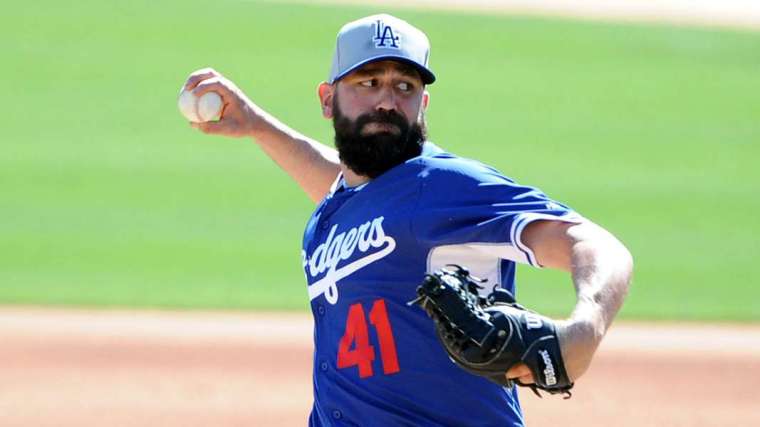
Just when we thought the youth would shoulder a large portion of the 2016 relief duties, the Los Angeles Dodgers went shopping on Tuesday and walked away with veteran righty Joe Blanton.

Jeff Passan of Yahoo Sports was first to report the one-year deal, which is worth a guaranteed base salary of $4 million. In addition, Blanton could earn $250K in incentives by pitching 50 innings, another $250K for 60 innings, and a further $500K if he eclipses the 70-inning mark.

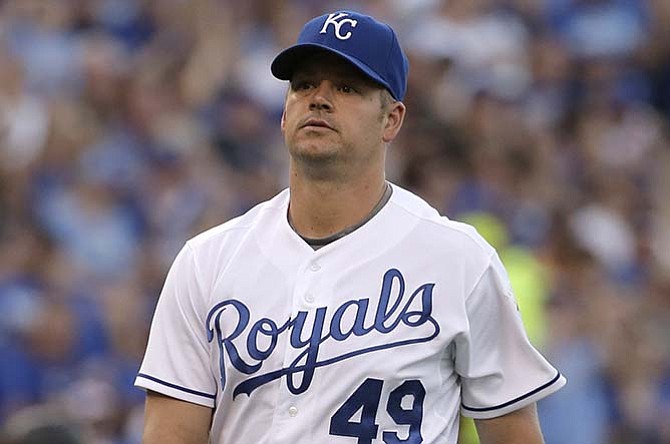
After posting a 6.04 ERA in 132 innings with the Angels in 2013, Blanton retired and was out of baseball for the entirety of the 2014 season. He rediscovered his mechanics last year and settled in as a reliever with the Royals before being dealt to the Pirates for cash at the trade deadline.

In 2015 with the Royals and Pirates combined, Blanton recorded a 2.04 ERA and a 2.56 FIP in 32 relief appearances, with 62 strikeouts and 12 walks in 57 innings of work.

Blanton, who turned 35 last month, dominated right-handed hitters last season, holding them to a .204 BA and a .239 wOBA, thanks primarily to his reinvented slider.

This will be his second stint as a Dodger, having gone 2-4 with a 4.99 ERA in 10 starts in 2012 after being acquired at the trade deadline from the Phillies.

Blanton projects to be a long man/swing man type for the Dodgers this year, but the deal leaves many fans scratching their heads, especially considering the needs at the back end of the bullpen. Maybe the underlying reasoning was to replace the departed Juan Nicasio, even with Carlos Frias and Mike Bolsinger both being very capable in that capacity.

Newcomers Frankie Montas and Yaisel Sierra, who are both believed to be major league-ready and are valued highly as prospective starters, may have benefited tremendously from a swing man spot as their introductory role in the bigs.

Also, if Hyun-jin Ryu returns healthy and slots into the rotation immediately, Alex Wood could be the odd man out. Rather than sliding into a long man role, he’d be optioned to Triple-A Oklahoma, where a huge, overcrowded situation already exists with starting pitching.

In light of everything, the front office could be guarding against a possible injury epidemic; or, perhaps a trade worthy of a much bigger headline may be on the horizon — conceivably in the form of a Mark Melancon or Jake McGee-type acquisition.

All the fun begins when pitchers and catchers report to Camelback Ranch exactly one month from today.

(Photo Credit: AP/newstribune.com)
Dodgers’ Youth Poised to Man 2016 Bullpen

chris-hatcher-ftr-0406-gijpg_e7c5e6sfkc7814vn96nuf8wq0

After primarily focusing on starting pitching and other numerous depth pieces so far this winter, the Los Angeles Dodgers‘ roster is beginning to get the feel of being almost complete and polished enough to contend for a pennant in 2016.

One area that still may be a concern in the eyes of many fans is the bullpen. On paper, it really doesn’t look all that bad, but based on injury potential and the results of seasons past, one or two solid upgrades could set the Dodgers apart from the rest of the division.

Notice the operative word is “solid.” Every year it seems the front office takes a gamble on a handful of NRIs hoping that one of them has rediscovered themselves and potentially makes a difference in the pen. Last year it was David Aardsma, Mike Adams, Ryan Buchter, Chad Gaudin, David Huff, Ben Rowen and Sergio Santos, but in the end none proved to be valuable enough to contribute for the duration of the season.

The high-profile veteran arms on the free agent market are always another option, but based on the salaries awarded for the talent that was available this offseason, it’s understandable that the Dodgers have passed on the bigger names. Run-of-the-mill relievers like Darren O’Day, Joakim Soria, Tony Sipp, Steve Cishek and Ryan Madson have all signed lucrative, multi-year deals, but erring on the side of caution with this group seemed to be the wisest choice for the Dodgers.

At one point, imagining Aroldis Chapman bringing up the rear of the Dodgers’ bullpen made every fan’s heart flutter with anticipation; however, the front office eventually used its best judgement and declined a surefire trade. Firemen like Jake McGee and Andrew Miller were also thought to be available in prospective deals, but ultimately their respective teams wanted a ton more than what they were perceived to be worth.

With a few exceptions, internal options always proved to be gold mines for the Dodgers, especially in the bullpen. With veterans Juan Nicasio and Joel Peralta having been swept aside, the Dodgers will need the youth to step higher. Considering the wealth of talent on the farm, it may not even be an issue.

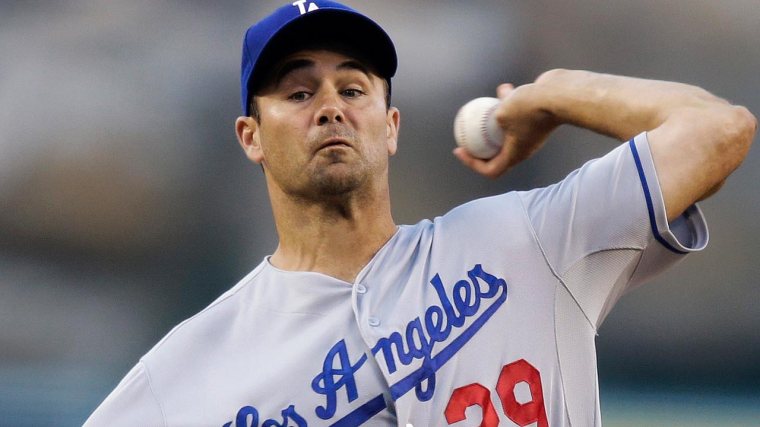
Assuming the Dodgers utilize a seven-man pen to open the season, the current lineup features Carlos Frias, Yimi GarciaLuis Avilan, Pedro Baez, Chris Hatcher, J.P. Howell and Kenley Jansen. This group is very young in itself, with everyone except Howell and Hatcher being 28 years old or younger.

Adam Liberatore, Josh Ravin and Ian Thomas are waiting in the wings if needed, but the real talent may lie even deeper in the farm system.

The Dodgers’ brass seems intent on trying new additions Frankie Montas and Yaisel Sierra as starters, but based on reported fastball velocities and other factors in scouting reports, their underlying talent may eventually reveal bullpen potential.

Jharel Cotton and Chris Anderson were also utilized as relievers late last year, and may be used in similar roles in 2016 based on the congestion in the starting rotation at Oklahoma City.

In light of everything mentioned above, the Dodgers have a multitude of talent available to contribute the bullpen — at least on paper. Looking towards the future, 2017 seems to be stacking up to be even more exciting, and could possibly feature a starting rotation and a bullpen rising towards being the best in the bigs.

After all, that was the plan all along.

(Photo Credit: sportingnews.com)

Dodgers Lineups: Who Bats Leadoff in 2016?

yasiel-puig-mlb-los-angeles-dodgers-san-francisco-giants-850x560

As the concept of the true leadoff hitter seems to be trending towards being a forgotten commodity in today’s sabermetric game, the 2016 Los Angeles Dodgers, like last year, give the impression of being one of those teams that puts little emphasis on having a legit speed burner at the top of the batting order.

The Dodgers’ rich heritage has seen players like Junior Gilliam, Maury Wills, Davey Lopes, Steve Sax, Brett Butler, current manager Dave Roberts and most recently Dee Gordon wreak havoc on the basepaths — bunting for base hits, swiping bags, and using that extra quickness to go from first to third or second to home when the squad needed it most.

Nowadays, statistics like oWAR and OPS+ exist to tell us that some of the best leadoff hitters in baseball are worth less than most average players in terms of wins and runs added to the team.

The role of the leadoff hitter is being redefined by many of today’s managers, coaches and front offices. Analytics have shown that getting on base more frequently and hitting the ball harder are actually more beneficial to a team’s success than the traditional values and perceptions.

In the same sense,  the customary duties of first base coaches like Lopes also show signs of changing.  In each of his three seasons in Philadelphia, the Phillies led the majors in stolen base percentage, including 87.9% (138-for-157) in 2007 — the best in MLB history. In contrast, the Dodgers, like many other clubs, haven’t gotten anywhere near those numbers in recent years, and don’t forecast to do so considering the departure of Gordon after the 2014 season.

Regardless, the critical point remains the same as it was 50 years ago — leadoff hitters need to get on base to create runs. And the players the Dodgers used last year — Jimmy Rollins, Joc Pederson and Yasiel Puig, for example — were very inconsistent in finding ways to get on base when the team needed it most.

New additions in Micah Johnson and Trayce Thompson may actually profile better hitting leadoff than many others on the Dodgers’ roster, but projections are difficult to make based on their limited time in the bigs. Still, room would need to be created on the 25-man roster for either one by trading away or DFA’ing one or more veteran players who may be considered less valuable.

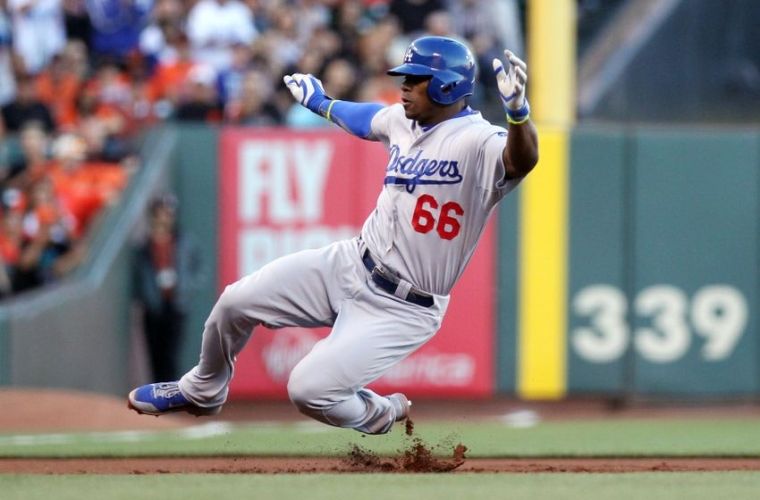
Based on potential alone, Puig seems to be the logical choice to assume the leadoff spot heading into 2016, but health, making contact with the ball, and on-base consistency will be the chief factors in determining his role in the lineup moving forward.

If able to rediscover his swing and reduce his strikeout rate from last season, Pederson may also be given another opportunity to bat first.

The good news is Roberts will have 33 Cactus League games to experiment and analyze which lineup combinations will be best for the club to begin the season. First base coach George Lombard and third base coach Chris Woodward also bring fresh perspectives in terms of improving run production.

All that being said, there’s still time for the front office to make an additional move or two to fill a few minor needs and change the complexion of the squad even further.

The Dodgers open Cactus League play against the White Sox on March 3.

(Photo Credit: Lance Iversen/USA Today)

Recalling the Dreadful Winter of 2010-11

lilly_1280_xxs08kso_ztjnxim8

With spring training rapidly approaching, fans around Dodgertown are still a bit distressed with the way the roster is shaping up for 2016. People are insisting that additional bats and bullpen arms are needed to contend, but considering the state of the franchise five years ago, things aren’t really as bad as they seem.

When November rolled around in 2010, ex-owner Frank McCourt was smack-dab in the middle of a horrific divorce, and based on the daily operations of the club that were visible to the public, the budget was extremely limited.

Joe Torre presumably sensed where the Dodgers were headed and decided to retire from managing completely, passing the reigns to Don Mattingly. After soaring to the NLCS in both 2008 and 2009, a downward trend was beginning.

Much to the dismay of many fans, Russell Martin was non-tendered. Assistant GM Kim Ng left for greener pastures. Brad Ausmus retired. Team psychic, magician and healer Vladimir Shpunt vanished. The roster was in shambles.

McCourt even went as far to sever ties with team president Dennis Mannion in an attempt to save money.

Former GM Ned Colletti took the funds that were allotted to him and attempted to spend wisely. He made what he thought were big splashes by signing Juan Uribe, Ted Lilly, Jon Garland and Matt Guerrier — all to multi-year deals.

Aiming to make the roster functional with hardly any money remaining, Colletti scored a group of low-cost, one-year contracts with scrappy, gritty veterans like Aaron Miles, Marcus Thames, Eugenio Velez, Dana Eveland, Juan Castro, Tony Gwynn Jr., Ron Mahay, Juan Castro, Mike MacDougal and Gabe Kapler.

On top of that, the Dodgers still owed money to Manny Ramirez, Juan Pierre, Andruw Jones and Jason Schmidt.

In terms of the minors, the farm system “seemed” to be in good order. John Ely and Carlos Monasterios were poised to anchor the back end of the starting rotation. Prospects were emerging — big things were expected from Jerry Sands, Russ Mitchell, Ivan DeJesus Jr., Justin Sellers, Kenley Jansen and Rubby De La Rosa.

In the end, the 2011 Dodgers were 82-79 and finished third in the NL West. Maybe it was the divorce. Or the lack of talent. Perhaps the management was incapable. Or maybe it was a whole lot of bad luck.

Regardless of those days, the Dodgers seem to be on the upswing. Sweeping changes have been made since that time. Only four players on the 40-man roster remain from 2011 — Clayton Kershaw, Jansen, Andre Ethier and A.J. Ellis.

Even coaches Tim Wallach and Davey Lopes, always fan favorites, have pursued other interests — nobody at all saw that coming.

In any case, three divisional titles have been won, and the franchise seems to be in much better position to go one step further. Hopefully for the sake of the fans, the players and the ownership group, that day comes soon.

In the meantime, perhaps everyone in Dodgertown should be grateful for the team’s current state of affairs.

Another winter like 2010-11 would be a total nightmare.

(Photo Credit: mlb.com)

Why the Dodgers Should Consider Signing Juan Uribe

tommy-lasorda-juan-uribe-mlb-atlanta-braves-los-angeles-dodgers1-850x560

While the Los Angeles Dodgers‘ front office continues to mold the 2016 roster, it’s safe to assume that more changes will occur and additional moves will be made before pitchers and catchers convene next month.

One recurring theme across this blog over the winter has been infield depth. The more we write about it, the more worrisome it becomes — especially at shortstop.

For many years into the future, the Dodgers are set with Corey Seager at short. Well, at least a few years, anyway, before the chatter emerges once again about a potential move to third base because of his size, range or whatever else critics decide to pin on him. But all that is beside the point.

Two areas of concern may need to be addressed.

First, who backs up Seager?

In light of the modern game, there’s no way Seager takes the field 162 times this year. Rest is needed. Injuries and sickness will happen, hopefully minor. All fingers are crossed to ensure he stays consistent and productive over the course of the season, but cover is required nonetheless.

We already discussed the possible roles of Enrique Hernández heading into 2016, and realistically, covering second, short, third base and center field may be a bit too much, especially taking into account his range, his glove, and his success against right-handed pitching at the dish.

Elian Herrera and Ronald Torreyes seem capable enough with the glove, but with relatively limited offensive ceilings, they’re not sexy choices by any means for a squad with World Series aspirations.

Secondly, who on the roster or the coaching staff is capable of mentoring Seager for one more year?

2015 saw Jimmy Rollins as the bridge to Seager being the everyday shortstop, but keep in mind Corey will still be 21 years old at the beginning of the season, and a strong, veteran presence around him would seemingly be very beneficial.

In view of the virtually “all new” Dodgers coaching staff for 2016, only two of the 10 coaches have any experience at all at shortstop.

Third base coach and former utility man Chris Woodward wasn’t exactly a wizard with the glove, while new quality assurance coach Juan Castro will be limited to clubhouse duties or watching the games from a suite.

Enter Juan Uribe.

Granted, at 36, Uribe doesn’t have the quickness of a fleet-footed gold glover, yet his defense is still solid. His range in his twilight years isn’t suited ideally for shortstop, but he’s more than capable of providing ample cover. The real value comes in getting a player who is also a dependable option at second base and third base, as well as being a legit long ball threat as a pinch hitter off the bench.

Uribe is very well respected by many of his peers, and possesses natural leadership qualities — something the Dodgers have been craving for the past several seasons, and something he was getting a handle on before being shipped to Atlanta last year. Most importantly, he could be a very influential mentor for a budding superstar like Seager.

Uribe won’t be demanding more than a one-year deal and shouldn’t add too much salary to the books. He could easily replace somebody like Alexander Guerrero on the 25-man roster, whose future with the club moving forward may be in limbo.

Above all, with an overloaded shift on the right side of the infield and an opposing runner on second, it never hurts to have an experienced player thinking one pitch ahead while shouting from the dugout for somebody to cover third in the event of a possible steal.

And that’s just one example.

(Photo Credit: dodgersway.com)

How the Dodgers Front Office Got Three Steps Ahead of Their Fans

Corey Seager takes batting practice at Petco Park.

Ned Colletti. See? Two words in and you, as a Dodgers fan, are feeling some type of way. The Dodgers under Colletti spent lavishly, made blockbuster trades, and threw their financial muster around at anyone and anything that would receive great public approval. How many World Series titles did the Dodgers claim? Oh that’s right. None. They didn’t even reach the World Series. While the Dodgers were spinning their wheels, Andrew Friedman and the Rays were popping bottles after 162 games.

The 2010 Dodgers roster featured names like Clayton Kershaw, Hiroki Kuroda, Vicente Padilla (and the surprising success of the soap bubble), Russell Martin, Casey Blake, Rafael Furcal, Garret Anderson, Matt Kemp (in his prime), and Manny Ramirez. Many of those names were considered premier talent in the league. Where did that team finish? 80-82, fourth place in the National League West.

The 2011 and 2012 Dodgers campaigns also failed to make the playoffs.

While the Dodgers failed to make the playoffs in 2010 and 2011 with a payroll north of $100 million, the Tampa Bay Rays made the playoffs in both seasons with a payroll checking in around $77 million in both seasons.

Now why did I spend the first four paragraphs laying all this out? Not just to calm you down from mentioning that name at the beginning of this piece, but also to provide apparently desperately needed perspective as this offseason trudges along without blockbuster Dodgers news.

Hiring a President of Baseball Operations like Friedman was the writing on the wall for many educated baseball observers, signaling the beginning of the inevitable. The Dodgers simply couldn’t spend close to $300 million per season chasing after a World Series. The first two seasons under the new ownership were a showcase, a promise to Dodgers fans that their complaints are heard, and better things were awaiting in the ashes of a nasty divorce.

While Dodgers fans have watched one of the most star-studded free agent markets in recent memory with longing eyes, that sneaky front office went behind their backs, and slowly, methodically, built the farm system with shrewd trades.

This is a new type of Dodgers baseball, and not the type sports writers want to see because the Hollywood storylines are much harder to come by. However, the front office has set up the franchise for years of competitive, and downright cheap talent. Cubans like Yusniel Diaz, Omar Estevez, and Pablo Millan Fernandez are cheap compared to the average Major League Baseball big name free agent, and the youth in farm system has astronomical, controllable potentialFor example, Joc Pederson won’t even be eligible for arbitration until 2018 (according to Spotrac.com). Prized pitching prospect Julio Urias, Jose de Leon, 2016 projected starting shortstop Corey Seager, and Puig all have years of control remaining on their contracts, with very high ceilings.

Signing the likes of David Price, Jordan Zimmerman, Johnny Cueto, and yeah even Zack Greinke would have only blocked the talent that is soon to be contributing at the Major League level. A 3-year deal for Scott Kazmir and an 8-year, incentive laden deal for Kenta Maeda are brilliant moves to mitigate overall cost while providing flex and trade value.

Don Mattingly is gone, fittingly to a team with its own set of problems. New manager (Dave Roberts), new look, same Dodgers success.

Patience. The agony of a boring offseason will be worth all the postseason glory. The Dodgers will make the 2016 MLB playoffs, and you’ll be right there, cheering them on. Think Blue Planning Committee will be cheering them on too, in between diving into your January Facebook posts to make fun of you for crying now and high-fiving in October.

Where Exactly Does Enrique Hernández Fit In?

enrique-hernandez_ntws373hvy41drp7ji2dff8d

Based on the player personnel on the Los Angeles Dodgers‘ current roster at the moment, one would be fairly confident in saying that the 2016 second base spot will be a platoon between Enrique Hernández and Chase Utley.

After all, the splits setup quite nicely. Last season, Hernández slashed .423/.471/.744 in 87 PA against lefties, while slashing only .234/.262/.331 in 131 plate appearances vs. right-handed pitching.

Utley isn’t really horrible when facing LHP, but his power numbers are far better against right-handers. Over his career, Utley has hit .260/.364/.448 with 68 home runs in 2130 PA vs. lefties, while batting .290/.365/.492 with 168 homers in 4628 PA against RHP.

Couple those numbers with the fact that Utley turned 37 two weeks ago, a platoon seems very logical. Despite the stats, some may still argue that the 24-year-old Hernández is ready to embrace an everyday role with the Dodgers, but careful reasoning suggests that he may be much more valuable off the bench in a utility role.

Because Hernández can cover many different positions, the number of looks he gets at the plate shouldn’t really be limited. And if injuries play any factor at shortstop, second or third base, we may see him on the field every day, anyway — despite the ugly splits.

We took a look at the roster depth just a few weeks ago, and although the backup options in the infield should be fine defensively, the offensive firepower would certainly stand to suffer.

Even with the signing of Elian Herrera, there’s really not a strong backup option for Justin Turner at third or Corey Seager at short, except for Hernández. And depending on how the Dodgers decide to configure their outfield come Opening Day, Hernández could be the best possible alternative to Joc Pederson in center field as well.

There’s still no guessing how the Alex Guerrero situation plays out, so the depth factor in the infield may be worse than it currently appears.

Outside of Ronald TorreyesMicah Johnson and Charlie Culberson, infielders are extremely barren in the farm system. Depending on the need,  Austin Barnes could also be called upon in a pinch.

The 2016 season may see the super-utility role as being far more important for the Dodgers than anticipated, and nobody stands to fill that spot better than Enrique Hernández.

Considering the possibilities and the needs, by no means would providing depth at 4-5 different positions be considered a backseat role, nor dictate a player’s future.

Just ask Justin Turner.

(Photo Credit: sportingnews.com)