Dodgers Starting Rotation: Kenta Maeda Making Early Impact

hi-res-30700b12118e96be5b2d0a7db944d658_crop_north

(Photo Credit: Ross D. Franklin/Associated Press)

Without a doubt, the hottest topic among Dodgers fans everywhere this spring has been the state of the starting pitching rotation. While several injuries are already preventing numerous starters from being in uniform on Opening Day, the signing of Japanese righty Kenta Maeda this offseason is beginning to appear brilliant.

The rumor around baseball is that the irregularities in his physical examination drove down the price tag of his contract, as made apparent by the Dodgers and Maeda’s representation never officially releasing a statement. Regardless, if he stays healthy and resembles a little of what he’s shown so far this spring, the eight-year deal worth a guaranteed $25 million may begin to pay dividends early.

Upon joining the Dodgers in December, early expectations from team management and scouting pundits were that Maeda had the ceiling of a back end rotation guy — an innings eater type with the potential to fill the four or five slot. Now, with Brett Anderson out three to five months after back surgery, and Hyun-jin Ryu not expected back until at least May, any offerings resembling a No. 2 or even a No. 3 starter would truly be welcomed.

So far in camp, Maeda seems to be adjusting to pitching in his new country nicely. Making his third Cactus League start Tuesday against the White Sox, he tossed 3-2/3 innings, allowing two runs (neither earned) while striking out three and walking two.

Overall this spring, Maeda has thrown 8-2/3 innings over three starts, allowing seven hits, four walks and no earned runs, having struck out eight batters.

His walk and hits total may seem a bit high, but Maeda says he’s still getting a feel for the strike zone.

“There were times when I threw pitches on the corner that I wanted strikes on but were called balls,” Maeda told Kyodo of The Japan Times.

“Had I got them, I would have had more strikeouts. I think I’m going to have to establish my reputation among the umpires as a pitcher with good control,” he added.

“I’m still throwing some fat pitches, but I was able to get some strikeouts, so it was a learning experience. Next time I want to do a good job while increasing my innings and pitch count and not walking batters.”

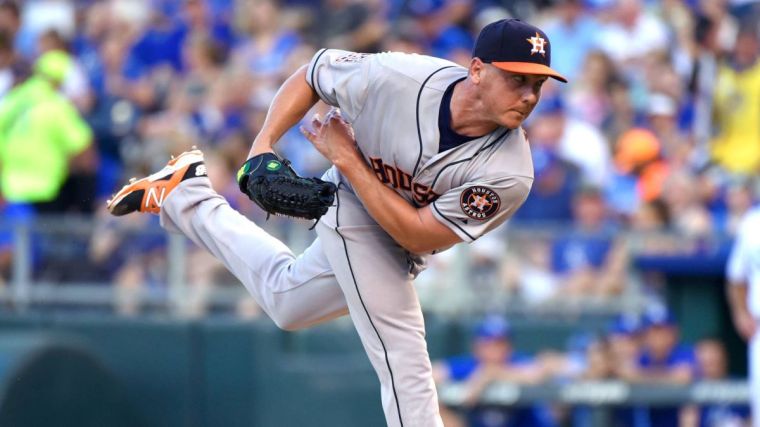
For those unable to watch Maeda throw on television or video, his pitching motion is almost identical to Hisashi Iwakuma of the Mariners. It’s almost reminiscent of the delivery of Dodger legend Hideo Nomo, minus the hip twist. Here’s an example of Maeda tossing a breaking pitch:

As for his repertoire of pitches, he’s no Zack Greinke, but he’s shown four different types of pitches this spring. His fastball has been clocked in the 90-91 MPH range, while his slowest curveball came in at 70 MPH. His changeup and slider are almost indistinguishable on the gun at 80-81 MPH, which will play especially well against right-handed batters.

Maeda is also rumored to be working on a “front door” slider, which he learned from fellow countryman Hiroki Kuroda — a pitch designed to break late and tail back inside towards right-handed hitters.

Battery mate A.J. Ellis has been impressed with what he’s seen from Maeda thus far in camp.

“He made big pitches when he had to,” Ellis told Ken Gurnick of MLB.com. “He did a great job. He’s fun to catch because he can do so many different things. His fastball up in the zone can really be enticing.”

In terms of culture, the language barrier and trying to live up to the fine careers of the Japanese legends who came before him, manager Dave Roberts said Maeda will have no problem adjusting.

“He’s going to fit in nicely,” Roberts said. “All we want is him to be himself. He can’t be Hideo or Kuroda or Kazuhisa.”

If spring training is any type of indication, Maeda will be just fine.
Rethinking the Dodgers’ Starting Rotation

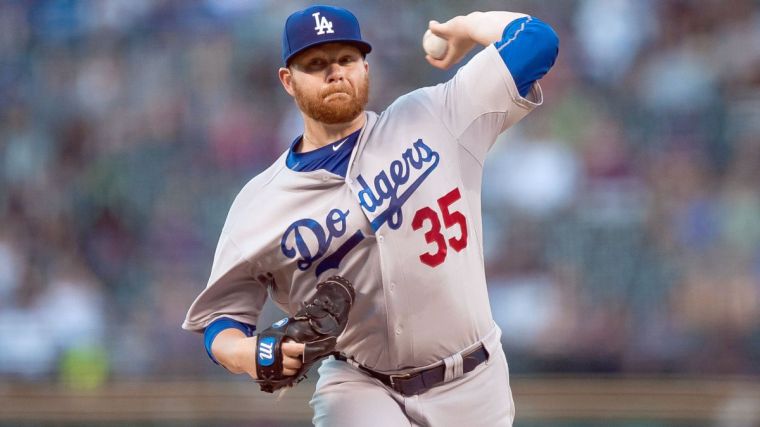
092815-MLB-Los-Angeles-Dodgers-Brett-Anderson-PI-JE.vresize.1200.675.high.26

It was only about a week ago that almost every writer in the Los Angeles Dodgers‘ blogosphere expressed an opinion about Alex Wood and what type of role he would play in the upcoming season.

Now, with Brett Anderson having had back surgery and expected to miss three to five months, Wood has been quickly ushered to the fourth spot in the starting rotation, while the Dodgers are left scrambling to swiftly determine which pitcher slots into the fifth spot.

The popular opinion, at least among many of the Dodgers’ beat writers in attendance at Camelback Ranch, is that the best option is to lean towards one of the three players who have MLB experience — Mike Bolsinger, Carlos Frias or Brandon Beachy.

Depending on the overall spring training evaluations, Bolsinger could very easily be the safest choice of the trio, despite having several glaring inconsistencies.

In 2015, Bolsinger ended up contributing 109 innings over 21 starts for the Dodgers, compiling a 6-6 record with a 3.63 ERA, a 8.1 K/9, and a 3.91 FIP. For those unfamiliar with FIP (fielding independent pitching), it separates a pitcher’s performance from the ballpark and defense around him. Generally if a pitcher’s FIP is higher than his ERA, it usually means the ERA is on the upswing.

Indications also suggest that Bolsinger’s lack of velocity has a bearing on his performance when facing opposing hitters the second and third times through the batting order. Not that a pitcher with a lower velocity can’t have success, but somebody with an average fastball of 89.2 mph and a slider floating in at 80.6 mph who can’t precisely hit his spots makes it much easier for the opposition to succeed.

Frias, on the other hand, has an electric arm and a very high ceiling based on his velocity alone. He made 17 appearances, including 13 starts, for the Dodgers last season, hurling 77.2 innings to a tune of a 4.06 ERA.

The knock on Frias is that the separation of speeds between his hard stuff and his breaking pitches is so small, that it allows opposing batters to make better reads. Last year, for example, both his fastball and sinker averaged in the 97-98 mph range, while his changeup averaged 91.8 mph. Until Frias can develop and command a more effective arsenal of breaking pitches, he may be better suited for the bullpen.

There’s really not much recent data to make a fair assessment of Beachy. After returning from Tommy John surgery last season, he pitched 47 innings over 10 appearances at Oklahoma City. When given the opportunity with the Dodgers, he surrendered 10 hits and seven earned runs in the two games he started.

One concern with Beachy is that he altered the mechanics of his delivery to avoid additional problems with his elbow. In his old delivery, he threw across his body to generate better spin, whereas now he throws more in a straight line towards the dish with less rotation. Whether this proves to be beneficial and effective in the long run remains to be seen.

While the safe bet may be to ride the shoulders of one of the aforementioned pitchers, the brain trust here at TBPC believes that one of the second-tier options — José De León, Zach Lee or Jharel Cotton may be the better alternative.

De León’s fastball, which has nasty, late movement and sits in the 93-96 MPH range, is by far his best weapon. His slider rates a little above-average but continues to improve. His changeup is by far his best off-speed pitch — he’s not afraid to use it when behind in the count and often uses it as his strikeout pitch. He’s considered to be MLB-ready and possesses the most raw talent of the three.

In terms of mental makeup, Lee is probably the most mature prospect in the organization. His command is very sharp, which was made evident by his 1.5 BB/9 last season. His sinker is consistently solid, resulting in a 50% ground ball rate. His slider is still developing, which will eventually compliment his four-seamer, changeup and sinker. Lee still shows plenty of velocity with the heater, having the ability to reach up to 94 mph.

Cotton probably has the best changeup in the Dodgers’ entire system, and projects much better as a starter after a short stint as a reliever in Triple-A last season. His fastball is still somewhat of an enigma, sitting in the mid-90s at times then sitting 90-91 other times . His breaking pitches are his best weapons, leading him to a 10.7 K/9 in almost 100 innings of work last year.

Of course, any rookie could have the finest skills on the diamond, but ultimately head downhill when given a shot in the bigs. Psychological fortitude is critical at the major league level — having the ability to see past a rough outing, having the mental endurance to stay strong the entire season and having the capacity to be coachable are just several attributes that are paramount for success.

While their performances on the field at spring training will have the most influence on who gets the eventual call to be the fifth starter, option years and 40-man roster implications aside, it very well could be time for one of the kids to step into the rotation and shine above the rest.

(Photo Credit: Dustin Bradford/Getty Images)

Dodgers Starting Rotation: The Future of Alex Wood

Alex Wood
Los Angeles Dodgers starting pitcher Alex Wood throws during the first inning of a baseball game against the Cincinnati Reds, Tuesday, Aug. 25, 2015, in Cincinnati. (AP Photo/John Minchillo)

Nowadays, typical fans of the Los Angeles Dodgers never seem to be satisfied. Understandably, it is tough to blame them, being that it’s been 27 years and counting since the team’s last World Series championship.

And the same typical fans can sometimes be a bit delusional — as we all very well know. Usually, it’s the constant criticism of the front office not spending more money, trading away a player who was a fan favorite, or not making that blockbuster deal just moments before the trade deadline. The psychological progressions and maddening obsessions eventually lead to the fans’ own personal greed and uninformed opinions coming to light, instead of realizing what’s best for the team in the long run.

The same can be said for Dodgers’ pitcher Alex Wood, at least up until several weeks ago. The moments after the team signed free agent pitchers Scott Kazmir and Kenta Maeda, the unenlightened fans began to work their glamour, calling for an immediate trade, only because the starting rotation was now overloaded with players who were more talented than Wood, and the bullpen already had two left-handed pitchers and two long men.

The fans had somewhat of a right to be critical, though, as Wood’s time in a Dodgers uniform after being acquired from the Braves resulted in a bit of a roller coaster ride.

His decreased velocity led to a plummeting strikeout rate. In 2014, he flaunted a respectable 8.91 K/9, while his overall numbers last year produced a mere 6.60 K/9. His 116 ERA- and 106 FIP- for the Dodgers were well below his career averages. And the home and away splits were also extremely noticeable.

Wood made five starts at Dodger Stadium, and all five were quality starts, reeling out a 2.41 ERA, a 3.25 FIP, a 20.2 percent strikeout rate and a 4.1 percent walk rate.

On the road, however, Wood made seven starts after joining the Dodgers, and just one was a quality start, resulting in a 6.14 ERA, a 4.88 FIP, a 14.3 percent strikeout rate and a 10.7 percent walk rate.

And to boot, a pitcher with a fastball topping out at 89 mph, an extremely low arm slot and a very strange delivery is never overly appealing to the typical fan.

All that being said, it came to light about a week ago that Wood has spent his whole Dodger career playing with a bone bruise in his right foot.

LA Times beat writer for the Dodgers, Andy McCullough, was first to report the details of the injury on February 22. In his final game with the Braves, Wood rolled his right ankle on a play covering first base. A bone bruise developed in his foot, which pained him every time his foot landed when he threw.

Wood used almost the entire winter letting his foot heal, and once he was able to throw pain-free, began to polish and fine-tune his mechanics.

“I had already gotten into some bad habits mechanically,” Wood said. “So it was a long offseason full of trying to get back to where I needed to be.”

The news of Wood’s injury, coupled with the actuality of Hyun-jin Ryu‘s delayed return, left fans more forgiving and forced them to realize that Wood is much more valuable to the team than what they perceived originally.

As for the beginning of the season, Wood will more than likely slot into the fifth spot in the rotation, at least until Ryu is ready to return, which could extend into May.

It’s been a number of years since the Dodgers’ main starting rotation stayed healthy for the bulk of a season, and Wood will remain on alert to fill any need when an injury does occur.

Early estimates for the usage of Ryu were calculated at the 20-start and 150-inning range. No projections were given for Maeda; however, both Maeda and Ryu are accustomed to throwing once per week rather than every five days, which may leave another door open for Wood.

It could be easy enough to sculpt a potential six-man rotation, where Wood would pitch on Maeda and Ryu’s scheduled fifth day, stretching time between starts and giving Maeda and Ryu the required rest that was common in their homelands — a large enough role to warrant Wood a spot on the 25-man roster.

As for the future, so long as his numbers stay stable and consistent, Wood is more valuable to the club than many fans realize. Brett Anderson is signed only through the 2016 campaign, while Kazmir’s contract involves a potential opt-out after this season. Brandon McCarthy, who is expected to return at some point during 2016, is only signed through 2017.

In terms of team control, Wood will not be eligible for free agency until the year 2020, and has all three option years remaining on his contract — a scenario that is valued very highly by today’s front offices.

Nevertheless, utilizing an option and being sent to the minors for any length of time isn’t an alternative in Wood’s eyes.

“I’m going to be in the rotation,” he said. “That’s the plan. That’s the thing I hate about the offseason, about spring training. I’m more about action than about talk. I plan on being in the rotation. And I don’t plan on leaving.”

Kenta Maeda’s 2016 Steamer Projections

maxresdefault

For all the baseball forecast enthusiasts looking for a few interesting predictions, the folks over at FanGraphs have finally put together a player page, including Steamer projections, for new Dodgers’ righty Kenta Maeda.

In terms of the more standard stats, the indicators have Maeda starting 29 games, compiling a 11-10 record with a 3.55 ERA over 178.0 innings pitched. A few of the advanced metrics reveal a 3.66 FIP, a 2.7 WAR, a 1.19 WHIP alongside a 7.73 K/9 and a 2.08 BB/9.

The majority of the pundits, including Maeda himself, seem to be shrugging off any potential elbow issues which led to a delay in agreeing on a contract back in December. The fact that the deal only guarantees Maeda approximately $3 million per year provides the Dodgers with some protection against such an injury, yet Maeda has expressed confidence in his ability to stay healthy and ultimately eclipse the 200 innings pitched mark in 2016.

Since signing with the Dodgers, Maeda has been very busy gearing up for the 2016 campaign and making final preparations for spring training. Amidst all the bustle, he managed to find time to spend with fellow countryman Hiroki Kuroda, who gave him several lessons on developing a new type of slider. Maeda calls it a “front door” slider, which is designed to break late and tail back inside towards right-handed batters.

Scouts who saw him throw at the Premier 12 tournament in November believe that Maeda’s off-speed arsenal has made dramatic improvements. He’s always depended heavily on his “traditional” slider, but the changeup he showed at the tourney was considered borderline nasty and almost unhittable when located properly. Maeda has always prided himself on his command, and if he can continue to develop his changeup and slider variations along with maintaining a relatively consistent fastball, he may even project to be a legitimate #3 starter or above as the season progresses.

Baseball America‘s Ben Badler agrees with the off-speed development and recently posted a scouting report (subscription required) on Maeda, which he offered the following analysis (excerpt):

“Maeda has shown solid stuff across the board, with a fastball that sits at 89-93 mph and can touch 94, a tick above-average slider that he leans on heavily, along with a curveball and a changeup … While Maeda’s slider is usually his go-to secondary pitch, his best offspeed weapon in two starts against Mexico and Puerto Rico was his changeup.”

Kenta Maeda was born in 1988 in Osaka and was drafted by the Hiroshima Carp in the fall of 2006. In 2010, Maeda won the Sawamura Award — Japan’s equivalent of MLB’s Cy Young Award —  when he led the Central League in wins, strikeouts and lowest ERA. His career statistics in Nippon Professional Baseball over eight seasons include 97 wins, 67 losses, a 2.39 ERA and over 1200 strikeouts.

(Photo Credit: youtube.com)

Dodgers, Kenta Maeda Agree on Contract

w3-jball-a-20140713-e1405169408203

One day after strengthening their starting rotation with the signing of Scott Kazmir, the Los Angeles Dodgers went a step further by reportedly reaching a contract agreement with Japanese righty Kenta Maeda.

Christopher Meola first reported the news on Twitter, which was later confirmed by Jon Heyman of CBSSports.com.

Terms of the deal are still unknown, but rumors that are swirling early suggest that the contract could possibly encompass eight years.

In addition to the money owed to Maeda in the terms of the contract, the Dodgers will pay the Hiroshima Carp a posting fee which may total up to $20 million.

Think Blue Planning Committee explored the possibility of signing Maeda earlier in December.

Maeda, who will be 28 at the beginning of the 2016 season, is considered by many the top current pitcher in Japan. He began pitching professionally at age 20 for the Carp in 2008. In 2015, he posted a 15-8 record, hurling 206+ innings while recording a 2.09 ERA, 7.6 K/9 and 1.8 BB/9.

His banner year may have been 2013, when he fanned 171 batters in 206 innings while logging a 1.53 ERA. His efforts for both of those years earned him Sawamura Awards — Japan’s equivalent to MLB’s Cy Young Award.

According to scouting reports, his early projection is to be a workhorse-type — possibly slotting in as a solid #3 or #4 starter upon his arrival to MLB.

Baseball America‘s Ben Badler recently posted a scouting report (subscription required) on Maeda, which he offered the following analysis (excerpt):

“Maeda has shown solid stuff across the board, with a fastball that sits at 89-93 mph and can touch 94, a tick above-average slider that he leans on heavily, along with a curveball and a changeup … While Maeda’s slider is usually his go-to secondary pitch, his best offspeed weapon in two starts against Mexico and Puerto Rico was his changeup.”

Maeda will compete for in a spot in the Dodgers’ starting rotation with Kazmir, Clayton Kershaw, Brett Anderson, Alex Wood and Hyun-jin Ryu, potentially breaking up the possibility of an all left-handed starting five.

With the offseason now past the halfway point, approximately seven weeks remain for the Dodgers to fine-tune and polish the roster before spring training begins.

Maeda will presumably report to Camelback Ranch with other Dodgers’ pitchers and catchers on February 19.

(Photo Credit: The Japan Times)

Dodgers Bolster Starting Rotation with Scott Kazmir

073015-MLB-HOUSTON-ASTROS-Scott-Kazmir-PI-FK.vresize.1200.675.high.20

In a much needed move to strengthen a questionable starting rotation, the Los Angeles Dodgers signed lefty Scott Kazmir on Tuesday to a reported three-year contract worth $48 million.

The deal involves several deferred payments, as well as an opt-out clause which may be exercised after only one season. The deferred money is reported to consist of three payments of $8 million each, spread out from 2019-2021.

Because he was dealt mid-season to the Houston Astros, the Dodgers did not surrender a draft pick to sign Kazmir.

At age 20, Kazmir began his career in Tampa Bay with Andrew Friedman as his GM in August of 2004. Despite his young age, Kazmir quickly became one of the better left-handed starting pitchers in the American League, primarily relying on a mid-90s fastball coupled with an extremely effective slider.

Nagging injuries led to inconsistencies from 2008-2011, and eventually forced Kazmir out of MLB entirely. After logging endless hours of individual work and persevering through several independent and winter league seasons, Kazmir signed a minor league deal with the Cleveland Indians before the 2013 season and eventually earned a spot in their big league rotation .

Since returning to the Majors, Kazmir, who turns 32 in January, has compiled a 3.54 ERA with a 8.1 K/9 and a 2.6 BB/9. In 2015, Kazmir was 7-11 with a 3.10 ERA and 1.208 WHIP in 31 starts between Oakland and Houston, recording 155 strikeouts and 59 walks in 183 innings of work.

The addition of Kazmir creates the potential for an all-lefty starting rotation, also featuring Clayton Kershaw, Brett Anderson, Alex Wood and Hyun-jin Ryu, if healthy.

The opt-out clause seems strategic for both parties in some senses. If Kazmir throws well in 2016 (considering the pitcher-friendliness of Dodger Stadium), he could opt-out and join a very scarce free agent market next year. In doing so, the Dodgers could potentially gain an extra draft pick if they extend a qualifying offer.

If the Dodgers add more starters via trade or free agency, and stay healthy through July in the process, they could possibly deal Kazmir to a contender before the trade deadline and conceivably gain a high-level prospect in return.

The Dodgers are also rumored to be in pursuit of Japanese righty Kenta Maeda, who was posted by the Hiroshima Carp earlier this month. The addition of Maeda, paired with a potential mid-season return of Brandon McCarthy, may perhaps balance out the rotation in terms of right-handers vs. left-handers.

Maeda has a 30-day window to make a contract decision which expires on January 8.

(Photo Credit: foxsports.com)

Hyun-Jin Ryu on Pace to Return by Spring Training

Hyun-Jin-Ryu2

Fans of the Los Angeles Dodgers finally received a bit of good news on Friday when starting pitcher Hyun-jin Ryu publicly revealed the progress regarding his recovery from last spring’s shoulder surgery.

Alongside teammate Justin Turner, several Dodgers legends, and members of the Los Angeles Dodgers Foundation, Ryu was at Dodger Stadium hosting 300 pre-selected schoolchildren at the annual Children’s Holiday Party.

Dodgers reporter Ken Gurnick of MLB.com first reported the news Friday evening.

“Other than throwing off a mound and going all out, I pretty much can do everything I want to do. I’m on a great program and everything is going great. No discomfort, absolutely nothing,” Ryu explained.

“I have no reason to believe I won’t be ready for Spring Training.”

Although the Dodgers’ medical staff and trainers are monitoring Ryu’s progress closely, the news comes as a bit of relief to many impatient fans who see a very sizable void in the starting rotation.

“My personal goal is to be in the rotation Opening Day until the season ends,” Ryu said.

Despite knowing that his initial physical before the 2013 season revealed a torn labrum in his left shoulder, Ryu pitched with the injury for two seasons and went 28-15 with a combined 3.17 ERA.

His best year was his rookie campaign in 2013, when he hurled 192 innings in 30 games, posted a 14-7 record (including one shutout) and a 3.00 ERA — numbers certainly worthy of a #2 rotation slot.

In light of Ryu’s progress, Dodgers’ President of Baseball Operations Andrew Friedman considers Ryu a “wild card” in terms of being ready for Opening Day.

Even with Ryu healthy, the Dodgers still need to add rotation depth, unless a solid and dependable option emerges from the farm  — most specifically Jose De Leon or Julio Urias.

The Dodgers have also been linked to trade rumors involving the Cleveland Indians and Tampa Bay Rays, as well as talks with free agent starters Mike Leake and Scott Kazmir.

Perhaps the best option of any is Japanese righty Kenta Maeda, who was posted by the Hiroshima Carp on December 10, and has a 30-day window to complete a contract agreement.

Regardless of what the Dodgers decide to strengthen and deepen the starting rotation, a healthy Ryu to begin the season would be very much welcomed by the fans, the players, and management alike.

(Photo Credit: isportsweb.com)